
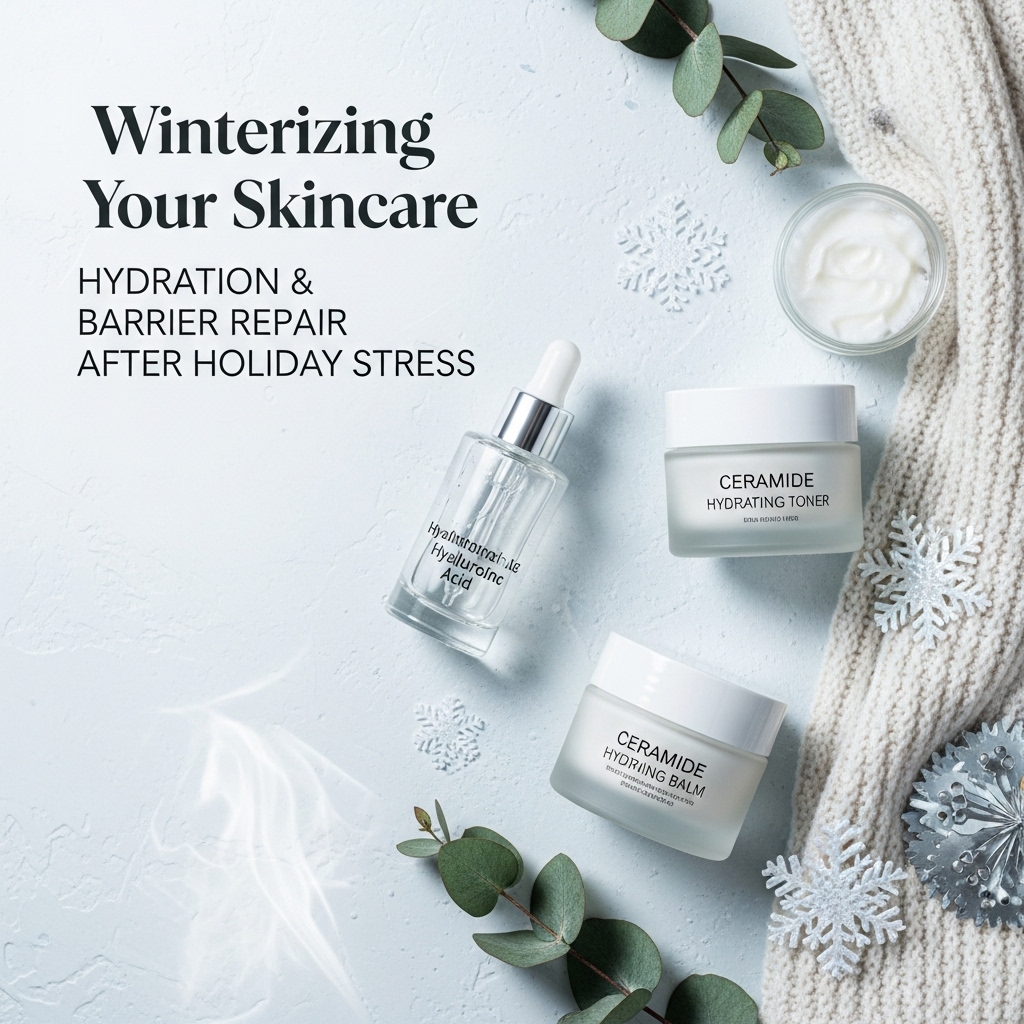
The holiday season can leave your skin dry, tired, and stressed from late nights, cold weather, and heavy makeup. As winter settles in, your skin needs extra hydration and a stronger barrier to stay smooth and healthy. A winter-ready routine helps lock in moisture and protects your skin from harsh winds and low humidity.
In this guide, you will learn simple, effective steps to winterize your skincare using gentle ingredients, hydrating formulas, and barrier-supporting products. Whether you struggle with dryness, dullness, or irritation, this winter skincare plan will help your skin recover and glow all season.
What Happens to Skin in Winter?
Winter is beautiful, but it can be harsh on your skin. When the temperature drops, your skin goes through some big changes that often lead to dryness and irritation. Understanding these changes is the first step to better winter skincare.
Moisture Loss: The Big Problem
The air outside in winter is cold and dry. Inside, we use heaters, which also create dry, hot air. This major difference between the outside and inside air is what causes moisture loss from your skin.
- Low Humidity: In summer, the air is humid (it has moisture), which helps keep your skin soft. In winter, the humidity drops, making the air “thirsty.” This thirsty air pulls water right out of your skin.
- Chapping: Wind and cold temperatures speed up this water loss, leading to that tight, chapped feeling.
Damaged Skin Barrier
Your skin barrier is like a brick wall protecting your skin. It’s made of skin cells and natural fats (lipids) that lock moisture in and keep germs and irritants out.
- Weakening the Wall: Because of constant moisture loss and the harsh elements, this protective barrier gets weaker. It develops tiny cracks, which lets water escape even faster. A damaged skin barrier is a common cause of dry winter skin.
Increased Sensitivity
When your barrier is damaged, your skin is no longer protected well. This results in increased sensitivity.
- Redness and Itchiness: Things that didn’t bother your skin before—like your usual soap or a warm shower—can suddenly cause redness, itching, and flakiness.
- Flare-ups: If you have conditions like eczema or rosacea, they often get much worse in the winter.
Signs Your Skin Needs Post-Holiday Recovery
The holiday season is fun, but it can be exhausting for your skin. Late nights, travel, rich foods, and heavy makeup are all forms of stress. If your skin looks unhappy once the new year starts, it’s probably sending signals that it needs a post-holiday recovery plan.
Here are the key signs of stressed skin and dehydrated skin after holidays:
Dull Tone
If your skin looks lifeless and lacks that healthy glow, you’re experiencing a dull tone.
- Why it Happens: Stress and lack of sleep slow down your skin’s natural renewal process. Dead skin cells pile up on the surface, making your complexion look grey or tired instead of bright.
Tightness and Uncomfortable Feeling
This is the most common sign of dehydrated skin after holidays. If your face feels too small for your skin, especially after you wash it, your skin is crying out for water.
- Look and Feel: You might notice fine lines looking more obvious, and your whole face feels tight and uncomfortable. This happens when you aren’t drinking enough water and the cold air is stealing moisture.
Flaky Patches
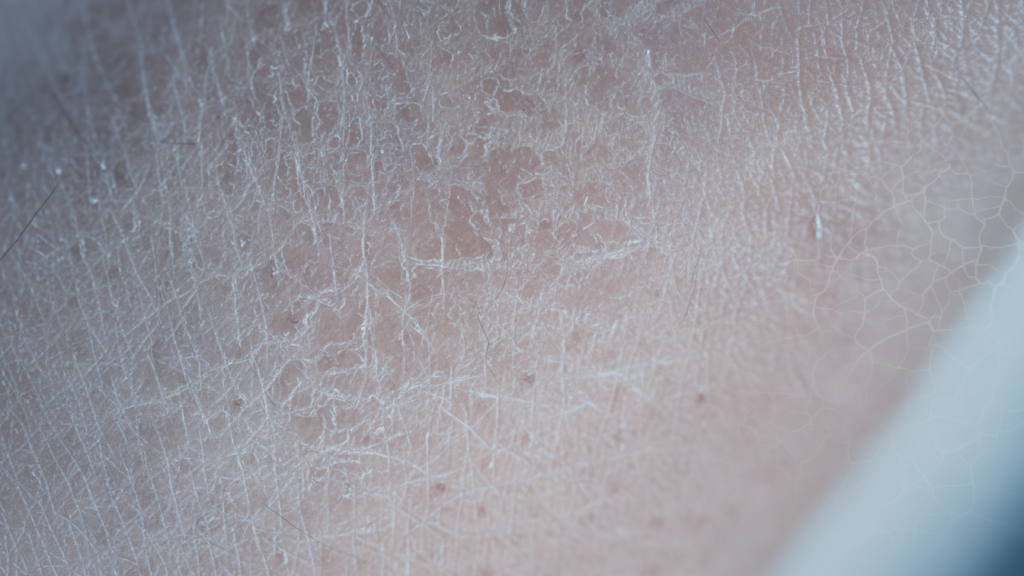
While this is a sign of dry skin, flaky patches are a specific symptom of severe dryness where the top layer of skin is peeling off.
- Areas to Check: Look for small, white flakes around your nose, forehead, and chin. Moisturizer often just sits on top of these flakes, making them more obvious.
Unexpected Breakouts from Heavy Makeup
Even if you don’t usually get pimples, you might see breakouts after the holidays.
- The Cause: Wearing heavy makeup (like long-wear foundation or glitter) for holiday parties can clog your pores. If you were too tired to properly remove all that makeup every night, oil and bacteria build up, leading to unexpected acne.

How to Build a Winter Hydration Routine
A successful winter hydration routine is all about preventing water loss and restoring your skin’s protective barrier. You need to swap out your lighter summer products for richer, gentler ones.
Here is the step-by-step guide on how to hydrate skin in winter:
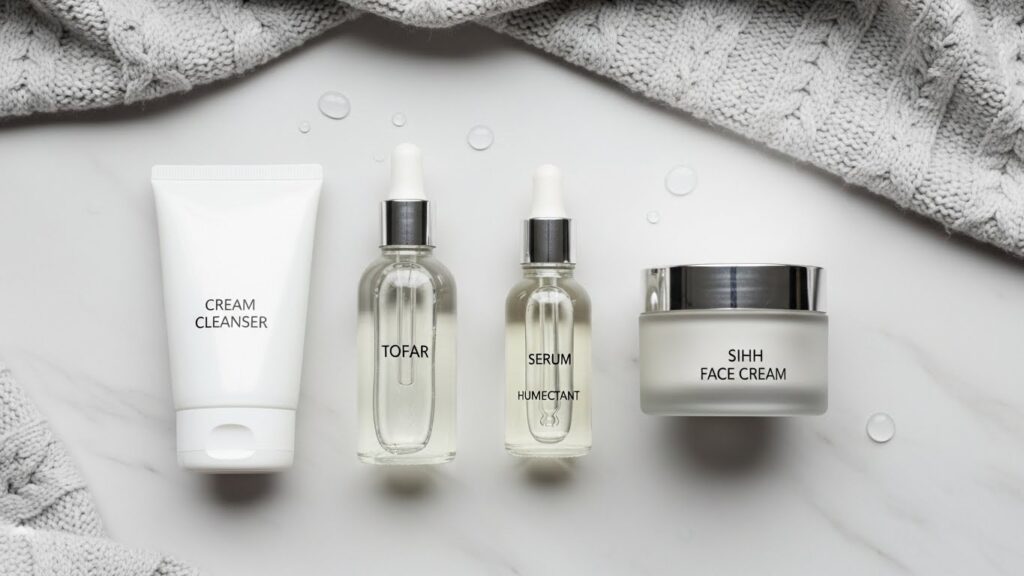
Step 1: Gentle Cleanser
- The Swap: Stop using foaming or gel cleansers that make your skin feel squeaky clean. These often strip your skin of its natural, necessary oils.
- The Choice: Use a gentle cleanser—a cream, oil, or milk-based formula—that cleans without leaving your skin feeling tight or dry. Use lukewarm, not hot, water.
Step 2: Hydrating Toners or Essences
- The Goal: Right after cleansing, your skin is ready to soak up moisture. Hydrating toners (or essences) are thin, watery products that add a light layer of hydration back to the skin before your main moisturizer.
- Ingredients to Look For: Choose one with humectants (like glycerin or hyaluronic acid, see below). Pat it onto your skin with your hands instead of using a cotton pad.
Step 3: Humectants and Serums
- The Magic Ingredients: A humectant is a substance that draws moisture from the air (or from deeper in your skin) and holds it on the skin’s surface. Think of it like a sponge.
- Examples: Look for serums that contain Hyaluronic Acid, Glycerin, or Aloe Vera. Apply this layer to slightly damp skin so it has moisture to pull from.
Step 4: Rich Moisturizers
- Lock it In: The thickest step in your routine should be a rich moisturizer. In winter, you need a product that not only adds water but also creates a physical barrier to prevent it from escaping.
- The Difference: Choose a cream or balm instead of a light lotion. Look for ingredients like ceramides, shea butter, or squalane, which are excellent at strengthening your skin barrier.
Best Ingredients for Barrier Repair
When your skin feels rough, tight, and sensitive, it means your skin barrier (your protective outer layer) is damaged. To fix this, you need specific, supportive ingredients. Building a barrier repair skincare routine is essential for a comfortable winter.
Here are the best ingredients to look for to strengthen your skin, especially in winter:
Ceramides
- What they are: Think of ceramides as the mortar between the bricks (your skin cells) that make up your protective barrier. They are natural fats found in high concentration in healthy skin.
- Why they are best for winter: When your barrier is damaged, you lose these fats. Using a product with ceramides for winter skincare directly replaces what is missing. This strengthens the barrier, stops moisture loss, and reduces sensitivity.
Niacinamide (Vitamin B3)
- What it is: This is a powerful form of Vitamin B3 that is great for overall skin health.
- How it helps: Niacinamide helps your skin produce more ceramides naturally. It also works to calm redness, reduce the size of pores, and improve the skin’s texture. It’s an all-around champion for barrier repair skincare.
Squalane
- What it is: Squalane is an excellent, lightweight moisturizing oil that is very similar to the oil your own skin naturally produces.
- How it helps: It sinks quickly into the skin to provide immediate hydration without feeling heavy or greasy. It locks in moisture and helps keep the surface of your skin soft and smooth, protecting it from harsh, dry winter air.
Panthenol (Pro-Vitamin B5)
- What it is: Panthenol is known as a humectant—meaning it attracts and holds water. It is also a very effective soothing agent.
- How it helps: When applied to the skin, it helps repair the top layer, making it feel softer and more elastic. It is particularly good at calming irritation and promoting the skin’s natural healing process.

Overnight Winter Skincare Tips
Nighttime is when your skin does its hardest work: repairing itself. While you sleep, your body temperature slightly rises, making it easier for products to sink in. Taking advantage of this time with a specific winter night routine can lead to amazing results.
Here are the best overnight skin repair tips for winter:
“Slugging” with Occlusives
- What is it? Slugging means applying a very thin layer of a thick, protective ointment (like petrolatum jelly or a very thick balm) as the final step of your winter night routine.
- How it works: This ointment creates a protective seal on the skin’s surface. This seal prevents transepidermal water loss (TEWL)—the water naturally leaving your skin. It dramatically locks in all the moisturizing products you applied underneath, leading to intensely plump, soft skin by morning.
Using Sleeping Masks
- What they are: Sleeping masks are richer, thicker versions of night cream. They are designed to stay on your skin for the entire night, providing a high dose of targeted ingredients.
- How to use: Use a sleeping mask 2-3 times a week instead of your regular night cream. Look for masks with nourishing ingredients like shea butter, oils, or honey for maximum overnight skin repair.
Running a Humidifier
- Why you need it: As mentioned earlier, indoor heating dries out the air. A humidifier adds moisture back into the air in your bedroom.
- The benefit: If the air around you has moisture, your skin will stop losing its own moisture to the environment. Running a humidifier all night while you sleep is a passive but incredibly effective step in your winter night routine.

Winter Skincare Mistakes to Avoid
Sometimes, the things we do to feel warm and clean are actually the most damaging to our skin in the cold weather. By avoiding these common winter skincare mistakes, you can greatly reduce dryness and irritation.
Over-Exfoliating
- The Mistake: Using harsh scrubs or strong chemical exfoliants (like high-strength AHAs/BHAs) too often. You might think you need to scrub away the flakes, but you are just making the problem worse.
- The Result: Over-exfoliating destroys the weak skin barrier even more, leading to major redness and sensitivity.
- The Fix: Reduce exfoliating to once a week, or switch to a very gentle, enzyme-based product until your skin feels healthy again.
Taking Hot Showers
- The Mistake: Nothing feels better in winter than a long, hot shower or bath. However, very hot water strips the natural protective oils (sebum) right off your skin.
- The Result: This leaves your skin defenseless against the dry air, leading to immediate dry winter skin and itchiness.
- The Fix: Keep the water warm, not scalding hot, and limit your shower time to 5-10 minutes. Always apply moisturizer immediately after gently patting your skin dry.
Using the Wrong Cleanser
- The Mistake: Sticking with your favorite foaming, stripping cleanser from summer, especially one that contains harsh sulfates (which create lots of foam).
- The Result: As detailed in Section 3, a foaming or wrong cleanser will remove necessary moisture and oils, contributing to a damaged skin barrier.
- The Fix: Switch to a non-foaming, cream, or oil cleanser during the winter months to protect your skin’s vital moisture level.

Short Summary: Conquer Dry Winter Skin
Winter brings moisture loss and a damaged skin barrier due to cold, dry air. To achieve winter skin recovery, focus on gentle care and intense repair.
Key Steps:
- Ditch Stripping Cleansers: Use a gentle cleanser and lukewarm water.
- Hydrate Deeply: Apply humectants (like Hyaluronic Acid) and seal with rich moisturizers.
- Repair the Barrier: Look for products with Ceramides, Niacinamide, and Squalane.
- Boost Nighttime Repair: Use techniques like slugging, sleeping masks, or a humidifier for superior overnight skin repair.
- Avoid Mistakes: Do not over-exfoliate or take hot showers.
Follow these winter skincare tips to keep your skin calm, hydrated, and protected all season long.
FAQs: Quick Winter Skin Recovery Answers
Redness is often caused by two things: exposure to cold wind, and damage to your skin barrier (see Section 1). When the barrier is weak, blood vessels are more reactive.
– The Tip: Focus on ingredients that calm and repair. Look for serums with Niacinamide (Vitamin B3) and moisturizers containing Ceramides. Also, wear a scarf or mask over your lower face when outside to protect against the wind.
You should use both! They serve different purposes.
– Cream Moisturizer: Provides the water-based hydration your skin needs.
– Face Oil: Provides occlusion (locks moisture in) and nourishment.
– The Tip: Apply your cream moisturizer first, then seal it in with a few drops of a face oil (like Squalane or Rosehip oil) as the final step in your routine to prevent moisture loss.
Winter acne is often caused by clogged pores from using products that are too heavy or from not cleaning off thick makeup properly (see Section 2).
– The Tip: While you need moisture, make sure your products are labeled “non-comedogenic” (meaning they won’t clog pores). Also, use a gentle chemical exfoliant (like Lactic Acid) only once a week to keep pores clear without irritating your skin.
Sunscreen is an absolute must, even when it’s cloudy! UV rays still reach your skin, and snow can actually reflect them, causing a double dose of sun damage.
– The Tip: Apply a broad-spectrum sunscreen (SPF 30 or higher) every morning. Reapplication is usually only needed if you are spending long periods outdoors (like skiing) or sweating. For a normal day, once in the morning is generally enough.