
Introduction: The Great Scarf Resurgence of 2026
If you thought scarves were merely meant for keeping frosty winds at bay, the 2026 runways have issued a major correction. This year, the scarf has transcended its practical roots to become the defining accessory of the silhouette. We are seeing a definitive move away from the bulky, infinity loops of the 2010s toward sleek, architectural, and highly intentional styling.
The Vibe Shift: “Winter Utility” to “Runway Statement”
The shift in scarf trends 2026 is palpable. It’s no longer an afterthought grabbed on the way out the door; it is the centerpiece of the outfit. Design houses like Celine have heavily leaned into the “bourgeois silk” aesthetic, utilizing perfectly folded foulards to add polish to tailoring. Conversely, Balenciaga and Proenza Schouler have championed dramatic, almost protective wrapping, turning oversized knits and technical fabrics into sculptural elements. The message is clear: how you tie it matters more than the scarf itself.
The Modest Crossover
Perhaps the most exciting development in current trends is the seamless overlap with modest fashion. The high-fashion embrace of the balaclava trend and hooded garments has provided modest dressers with runway-endorsed options that don’t sacrifice coverage for style. High-neck styling and full-head wraps are no longer niche; they are at the forefront of the “cool girl” aesthetic, bridging the gap between religious observance and contemporary street style.
The Golden Rule: “Vintage Chic” vs. “Dated Costume”
How do you wear a silk scarf without looking like you raided a dusty costume box? The difference lies in the rest of your styling.
- The Dated Look: Pairing a retro scarf tie with equally retro clothing (e.g., a poodle skirt or an outdated cardigan).
- The 2026 Look: The Golden Rule is contrast. Pair a vintage-inspired silk tie with modern, slightly oversized tailoring, distressed denim, or sleek leather. The scarf should act as a refined punctuation mark against a contemporary outfit, not a historical reenactment.
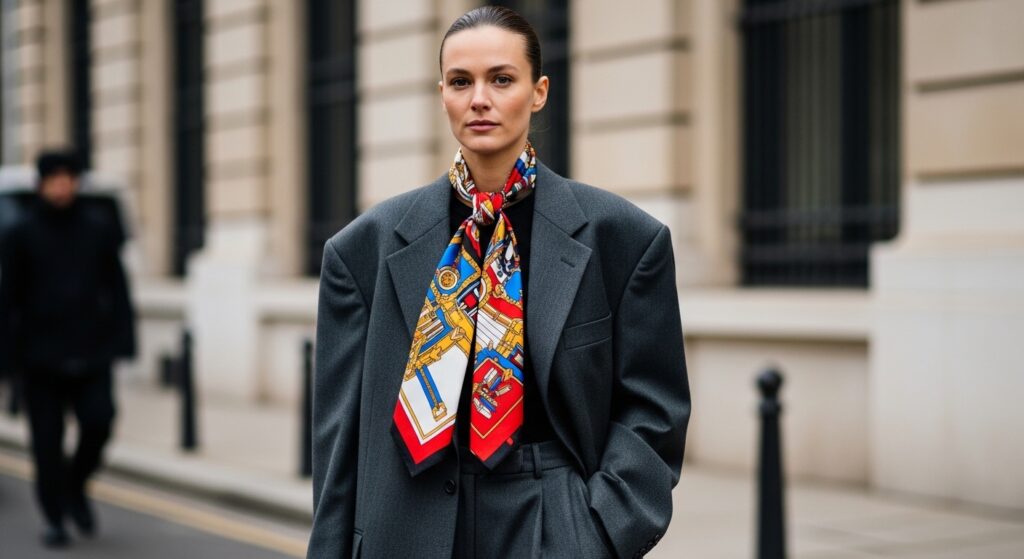
Headscarf Styles: The “It-Girl” & Modest Approvals
Navigating headscarf fashion in 2026 means mastering the balance between structure and ease. Whether you are looking for a modest hijab style that feels current, or simply want to participate in the head-covering trend, these three looks are dominating feeds right now.
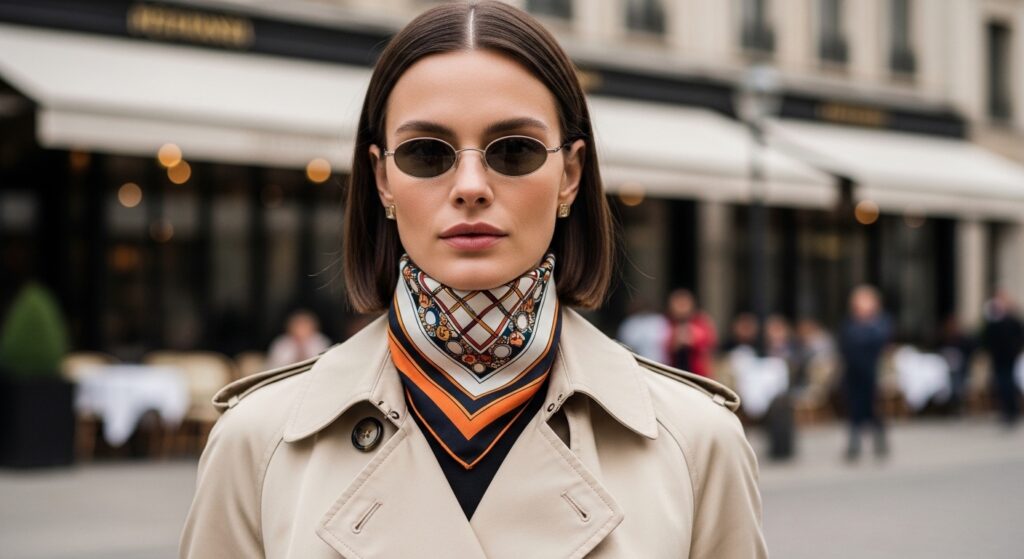
The “Retro Glam” (Under the Chin)
This is the most defining silk scarf look of the year, channeling a distinct ” Old Money Aesthetic.” It’s neat, precise, and incredibly chic.
- The Look: Take a medium-sized square silk scarf (around 70cm or 90cm). Fold it in half diagonally to create a triangle. Place the folded edge across your forehead, just above the eyebrows, and pull the two ends tightly down past your ears. Tie them firmly in a double knot right under the chin.
- Why it works in 2026: This style is the antithesis of “messy.” It screams intentionality. It is currently favored because it pairs flawlessly with other trending items like structured trench coats, boxy leather jackets, and slim oval sunglasses. It’s a nod to icons like Grace Kelly, but worn with a modern attitude.
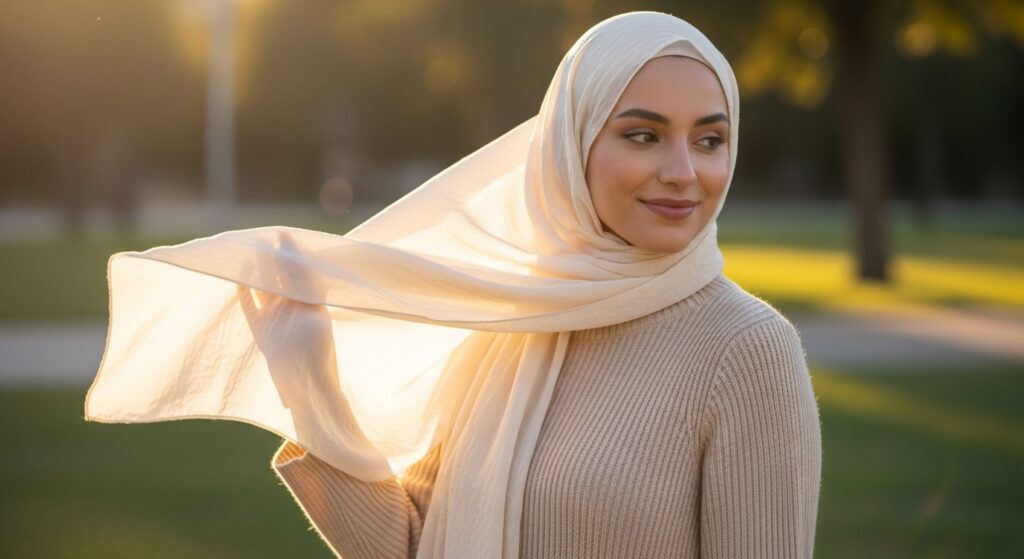
The “Effortless Veil” (Loose Drape)
For those who prefer a softer, more romantic approach, the effortless drape offers elegance without rigidity. This is a go-to for modest scarf styling when you want coverage that doesn’t feel restricting.
- The Look: Place a long rectangular scarf or a large square folded into a rectangle over your head with one side slightly longer than the other. Pin it loosely under the chin (using a no-snag safety pin or magnet). Take the longer end and drape it casually over the opposite shoulder.
- Modest Note (Crucial Tip): The key to this look isn’t just the tie; it’s the fabric. Slippery satins will slide off immediately without a tight underscarf. To achieve this loose look without constant adjusting, opt for scarves with texture. A silk twill (which has a slight ribbing), a fine jersey knit, or a textured crepe de chine will provide the necessary grip against your hair or tube cap.
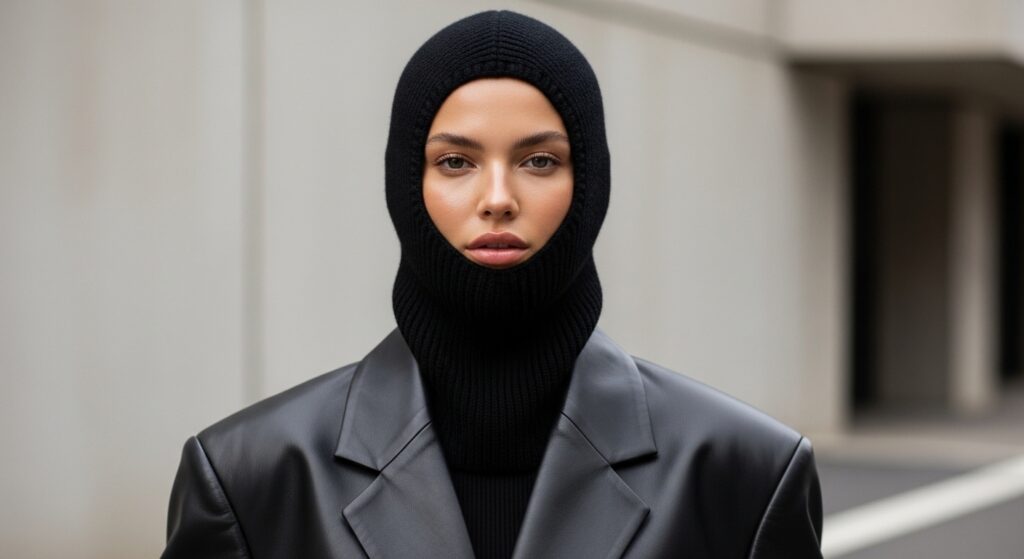
The “Masha” Hood (The Balaclava 2.0)
Love it or hate it, the balaclava trend has evolved into a staple, largely thanks to influencers like Bella Hadid and Zendaya normalizing the look outside of ski resorts. It frames the face beautifully and offers streamlined warmth.
- The Trend: We are moving away from full-face coverage ski masks toward refined knit hoods that cover the hair, ears, and neck, leaving the full face exposed. Think fine-gauge cashmere knits rather than chunky acrylics.
- Styling Hack: The biggest challenge with balaclavas is dealing with the neck area. To ensure full modest coverage without creating bulk around the throat, wear a thin, fitted cotton turtleneck underneath your top layer. Pull the balaclava on, and tuck the neck portion smoothly into the collar of your coat or blazer for a seamless, sleek finish.
Neck & Body Styling: Wearing the Scarf as “Clothes”
In 2026, the scarf has graduated from a mere accessory to a fundamental building block of the outfit. Designers are no longer just draping fabric; they are constructing new silhouettes. This season, think of your scarf less as winter protection and more as a versatile textile that transforms your existing wardrobe.
The Skinny Scarf (The 2026 Necklace)
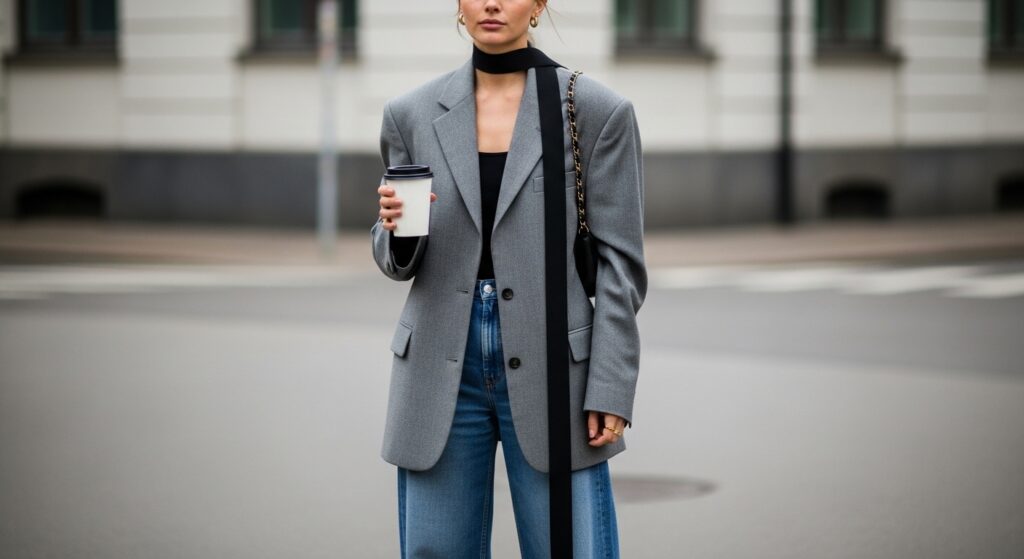
The skinny scarf trend has stormed back, heavily influenced by the effortless cool of Copenhagen Fashion Week. This isn’t the chunky wool muffler of the past; it is a razor-thin strip of silk or chiffon that functions as jewelry.
- The Look: Use a long, slender scarf (often called a “Lavallière” or “Twilly”). Wrap it once casually around the neck, letting the long ends trail vertically down the front of your body.
- Current Update: The key to mastering this look is context. Do not wear this for warmth with a puffer jacket. Instead, style it over a sharp blazer, a deep V-neck evening dress, or a structured waistcoat. It adds vertical lines that elongate the torso, serving the same visual purpose as a long pendant necklace but with more softness and movement.
The “Scarf-Top” Construction
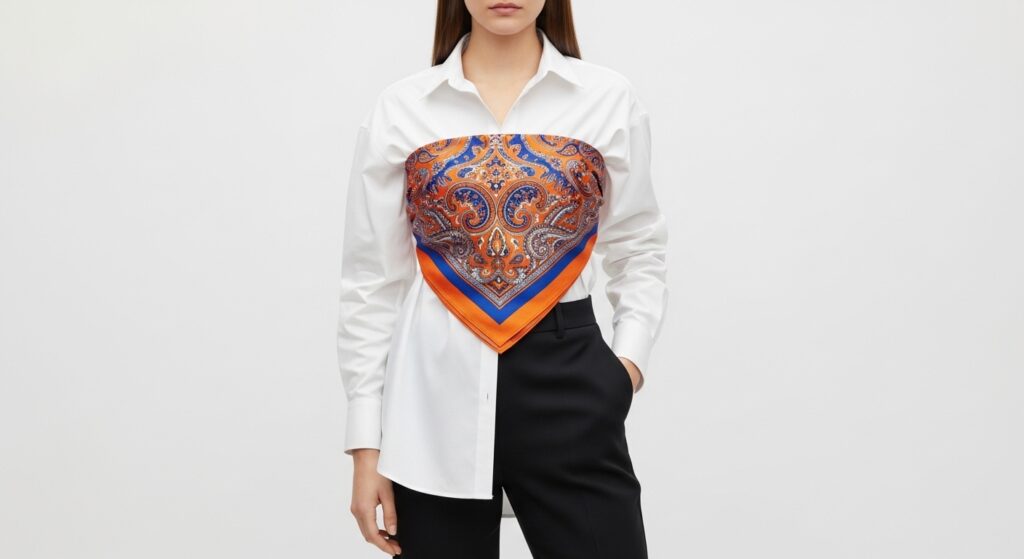
The DIY scarf top has been a summer staple for years, but in 2026, it has been elevated into a year-round layering piece. It’s about leveraging the print and color of a large scarf to create an entirely new garment.
- The Look: Take a large square scarf (90cm x 90cm or larger). Fold it into a triangle and tie it behind your back to create a halter or bandeau silhouette.
- Modest Hack: For those who love the print but need the coverage, the layered scarf top is a game-changer. Do not wear the scarf on bare skin. Instead, wear a crisp, oversized white button-down shirt or a fitted black turtleneck first. Layer the silk scarf over the shirt, tying it securely at the waist or neck. This creates a corset-like, architectural effect that adds waist definition and high-fashion complexity to a simple modest outfit.
The Waist Cinch
Forget traditional leather belts. The silk scarf belt is the soft power move for trousers this year. It introduces pattern to the waistline and breaks up monochrome outfits.
- The Look: Thread a long, rolled silk scarf through the belt loops of high-waisted trousers or jeans. Knot it once at the side or front, letting the ends hang naturally. This works exceptionally well with linen trousers in summer or heavy wool pleats in winter, adding a touch of “soft tailoring.”
Accessory Styling: The Details
Sometimes, the most impactful trends are the smallest ones. Scarf accessories in 2026 are all about precision and polish, moving away from the “haphazard” styling of the previous decade.
The “Handle Wrap” (Bag Styling)
Customizing handbags is a massive trend, but the technique has changed.
- Update: We are saying goodbye to the messy, oversized bow tied onto a strap. The current “It” look is the Hermès-style handle wrap. This involves tightly and precisely wrapping a skinny silk scarf around the entire top handle of your bag, ensuring no gaps are visible. It protects the leather handle from oils and wear while adding a customized pop of color. It looks expensive, deliberate, and neat.
The Wrist & Pony
The “micro-scarf” is having a moment.
- The Micro-Trend: Utilize “Twilly” or handkerchief-sized scarves as bracelets. Wrap them snugly around the wrist and knot them for a bohemian-luxe bracelet stack. Alternatively, weave a thin silk scarf into a long braid or tie it around the base of a low ponytail. This adds a texture element to hair that feels romantic yet controlled.
How to Avoid Looking Dated (The “Don’ts” of 2026)
Fashion is cyclical, but silhouette is everything. To ensure your scarf game remains fresh, there are specific styles you must retire.
Retire the “Infinity Scarf”
If there is one item to donate this year, it is the chunky infinity scarf. The closed-loop, cowl-neck shape that sat heavily on the chest was ubiquitous in 2012. Today, it creates a top-heavy, unbalanced silhouette that lacks the fluidity of modern styling. 2026 is about ends that move and drape, not loops that constrict.
Avoid “Messy Boho” Loops
Ten years ago, the trend was to wrap a massive blanket scarf five times around your neck until you were buried in fabric. That “messy effortless” look now reads as cluttered. Scarf trends 2026 favor clean lines, deliberate knots, and showing the neck (or the turtleneck underneath). If you are adjusting it constantly, you’ve wrapped it too many times.
Fabric Matters
Nothing ruins a look faster than poor-quality fabric.
- Avoid: Cheap, shiny polyester. It slips, builds up static electricity that ruins hair, and has an artificial sheen that looks inexpensive in photos.
- Choose: Mulberry silk, satin, cashmere, or crisp cotton. Even a high-quality rayon or modal blend is better than cheap poly-satin. Natural fibers drape better, knot more securely, and breathe, making them functional as well as fashionable.
Care & Maintenance
A silk scarf is an investment piece. With proper care, a high-quality foulard can last decades and become a vintage heirloom.
Silk Care: Hand-Washing vs. Dry Cleaning
Silk is a protein fiber, similar to human hair.
- Hand-Washing: You can hand-wash most silks in cold water with a pH-neutral, delicate detergent (like baby shampoo). Do not wring or twist! Roll it in a towel to absorb water and lay flat to dry.
- Dry Cleaning: For oil stains or complex structured silks (like pleated scarves), professional dry cleaning is safer to maintain the finish.
Storage: Rolling vs. Folding
- The Secret to Longevity: Never leave silk scarves tied in knots when you take them off; this sets permanent wrinkles.
- Rolling is Best: To prevent sharp creases that weaken the fibers over time, roll your scarves gently and store them in a drawer. If you must fold them, try to avoid putting heavy weight on top of the folds. A quick steam (never a direct iron) will refresh the bounce of the fabric instantly.