

Introduction
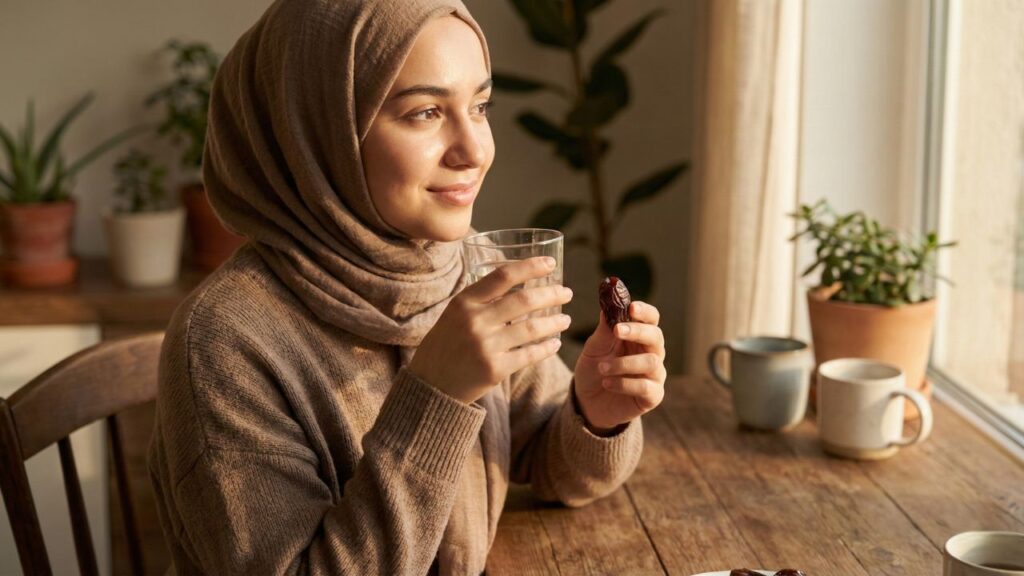
Ramadan is a time for a spiritual detox, but let’s be honest: it often leads to a skin detox we didn’t ask for. While your soul feels lighter, your skin often feels tighter. We all know the struggle—you wake up for Suhoor, barely drink two glasses of water, and then spend the day battling fatigue.
Add in the broken sleep schedule and the inevitable Iftar indulgence (yes, we’re looking at you, oily pakoras and sugary samosas), and you have the perfect recipe for dull, dehydrated skin. But here is the good news: you don’t need to pile on heavy concealer to hide the “fasting fatigue.”
This Ramadan skincare routine is designed to bridge the gap between your beauty goals and the holy month. It is not about vanity; it is about barrier repair. By focusing on hydration strategies that work with your fast, you can achieve that “no-makeup” glow that lasts from Suhoor to Iftar.
Why Fasting Dehydrates Your Skin (The Science)
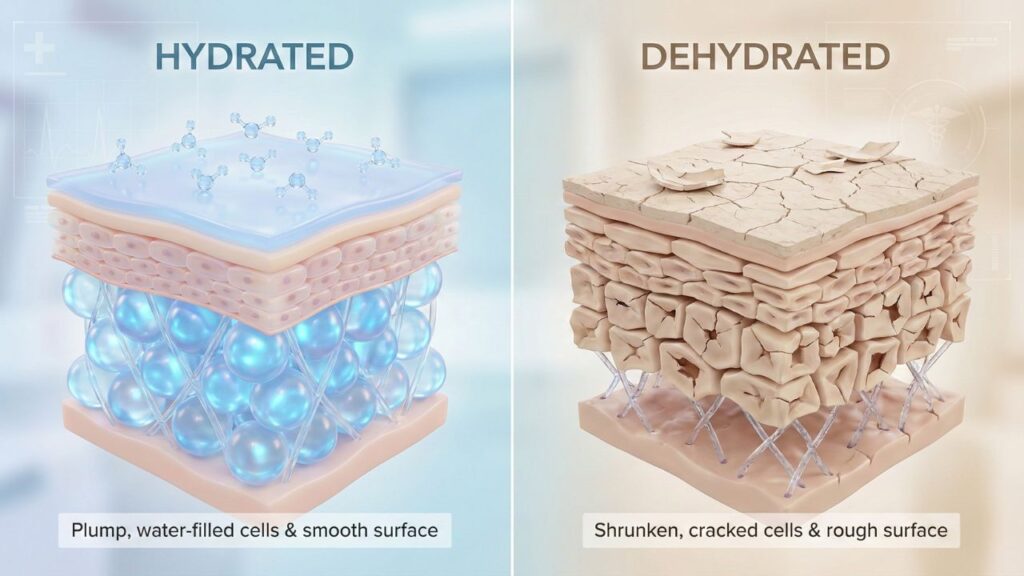
To fix the problem, we first need to understand the biology of fasting. There is a scientific reason why your skin looks “tired” by 2:00 PM. It comes down to a process called Trans-Epidermal Water Loss (TEWL).
When you stop drinking water for 12+ hours, your body enters survival mode. It creates a “hydration hierarchy,” prioritizing your vital organs (like your heart, brain, and kidneys) over non-vital ones. Unfortunately, your skin is low on that list. Your body literally borrows water from your skin cells to keep your organs functioning, leaving your face looking flat and gray.
This is why heavy foundation looks terrible during Ramadan. When your skin is dehydrated, it acts like a dry sponge—it sucks the moisture right out of your makeup, causing the pigment to crack, settle into fine lines, and look cakey. The solution isn’t more makeup; it’s preventing that water loss in the first place.
The “Suhoor” Skincare Routine (Pre-Dawn Prep)
Think of your Suhoor routine as “pre-loading” your skin with water. Your goal here is not to treat acne or anti-aging; it is strictly to lock in moisture before the sun comes up.
- Skip the Foam: Do not use a foaming cleanser at 4:00 AM. Foaming agents strip your natural oils, which you desperately need right now. Instead, wash with plain water or a milky, non-foaming cream cleanser.
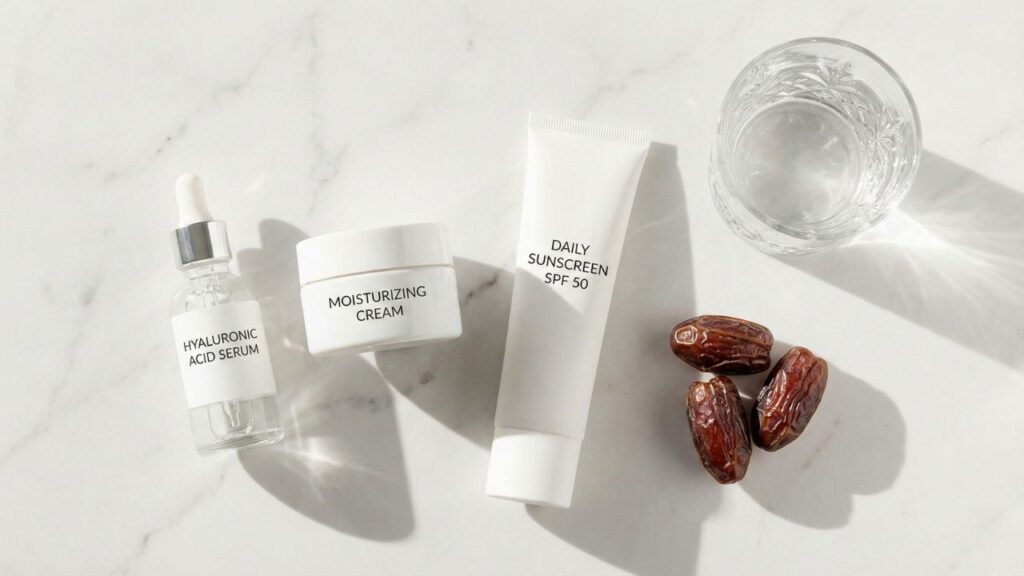
- The Magic Layer (Damp Skin Rule): This is the most critical step. After washing, do not towel dry your face completely. While your skin is still damp, apply a Hyaluronic Acid serum. Hyaluronic Acid acts like a magnet, holding up to 1000x its weight in water. If you apply it to dry skin, it can actually pull water out of your skin; applied to damp skin, it locks water in.
- Seal It In: Serum alone isn’t enough; it will evaporate. You must use a thick, ceramide-rich moisturizer to create a physical seal (an occlusive layer) that traps that hydration for the long day ahead.
- SPF is Non-Negotiable: Just because you are fasting doesn’t mean the sun takes a break. UV rays accelerate dehydration. If you are near a window or going outside, a hydrating SPF 50 is the final armor your skin needs.
The “Fasting Hours” Survival Guide (Mid-Day)
The hours between Dhuhr and Asr are usually when the “fasting fatigue” hits your face. Here is how to refresh without breaking your fast or your wudu.
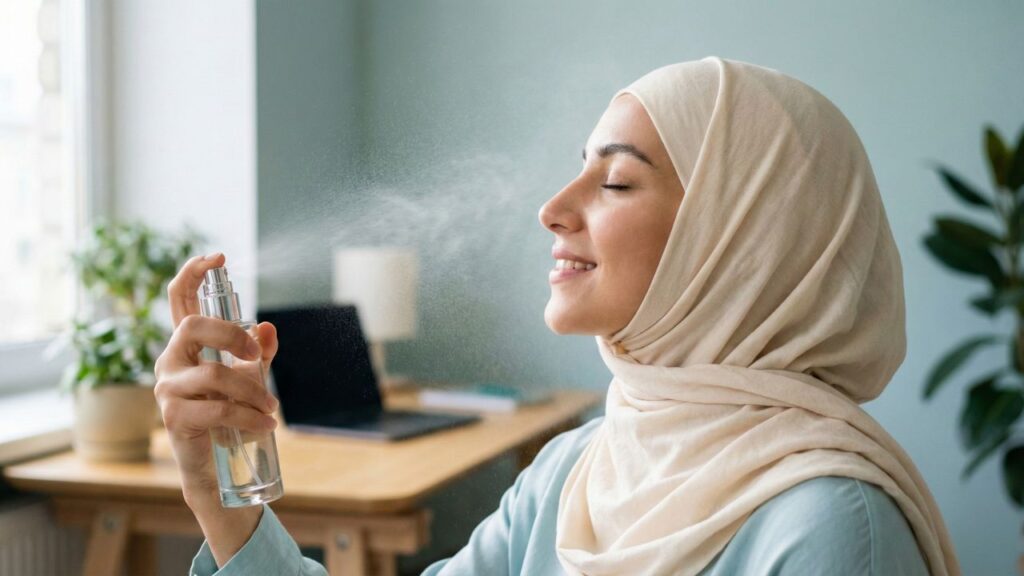
- Face Mists (The Desk Essential): Keep a hydrating face mist on your desk or in your bag. Look for ingredients like Rose Water, Glycerin, or Aloe Vera. Avoid alcohol-based setting sprays, which are drying. A quick spritz provides instant relief to tight skin.
- Wudu & Skincare: Ablution (Wudu) is physically purifying, but washing your face 3-4 times a day can strip your moisturizer.
- Tip: You don’t need to use a cleanser during Wudu; water is sufficient.
- Tip: Keep a travel-sized moisturizer in your prayer corner. Immediately after drying your face, reapply a thin layer to prevent that “tight” feeling.
- Lip Care: Dehydration shows up on the lips first because they have no oil glands. Licking your lips makes them drier. Use a heavy, occlusive lip balm (lanolin or petroleum-based) to create a barrier. Note: Ensure the balm has no flavor to avoid accidentally swallowing it.
The “Iftar” Recovery Routine (PM & Night)
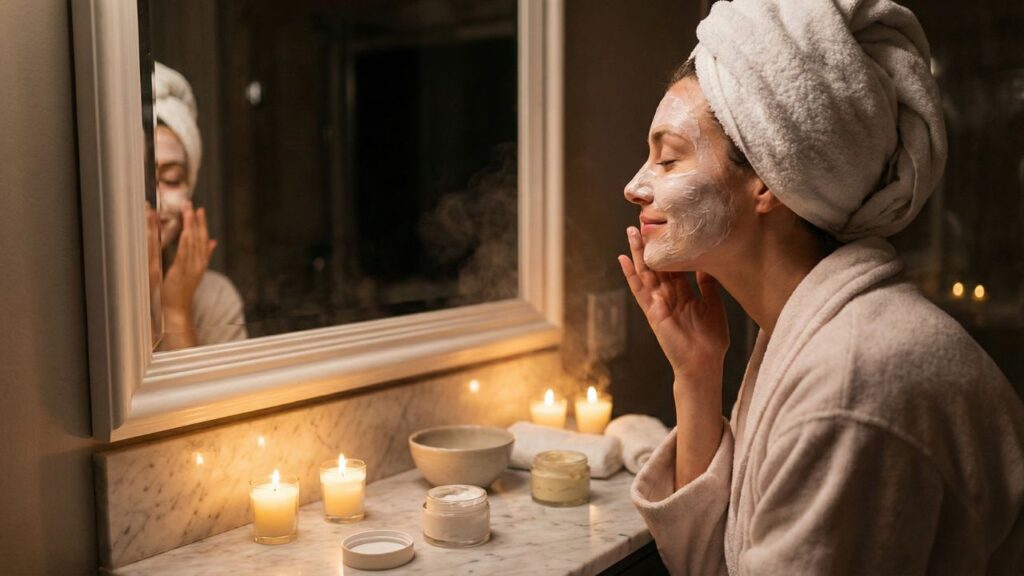
Once the fast is broken and the prayers are said, your skin enters its most critical phase: recovery. While you sleep, your skin works overtime to repair the dehydration damage from the day. This is the time to bring out the heavy hitters.
- The Double Cleanse: If you wore sunscreen (which you should have!) or any tint during the day, a single wash won’t cut it. Start with an oil-based cleanser or balm to melt away SPF and sebum without stripping your skin. Follow up with your gentle, water-based cleanser. This ensures your pores are actually clean and ready to absorb hydration.
- Exfoliation Warning: It might be tempting to scrub away dull skin, but proceed with caution. Dehydrated skin is more sensitive and prone to irritation. Limit strong acids like Glycolic Acid (AHA) or Salicylic Acid (BHA) to once a week. Over-exfoliating a compromised barrier is a one-way ticket to redness and stinging.
- Overnight Masks (The Secret Weapon): Swap your standard night cream for a sleeping mask or a thick, occlusive moisturizer. These are designed to release moisture slowly throughout the night, acting like an IV drip for your face. Look for ingredients like Ceramides, Squalane, or Cica (Centella Asiatica) to soothe inflammation and wake up with that “plump” feeling.
Internal Hydration: The “Edible Skincare” Diet
Content: You can apply the most expensive creams in the world, but if you aren’t hydrating from the inside, it won’t matter. The window between Iftar and Suhoor is short, so you need to be strategic.
- The 2-Liter Rule: Trying to chug 2 liters of water at Iftar will just make you bloated and sluggish. Instead, aim for the “Cup-an-Hour” method. Drink one glass at Iftar, one after Maghrib, one with dinner, one after Tarawih, and so on. This pacing helps your body absorb the water rather than flushing it out immediately.
- Glow Foods: Eat your water! Incorporate foods with high water content into your Iftar meal. Watermelon (92% water), Cucumber (96% water), and Yogurt are superstars. Yogurt is particularly excellent as it contains probiotics for gut health and natural electrolytes to replenish what you lost during the day.
- The “Sugar Face” Danger: We know, the jalebis and rooh afza are calling. But excessive sugar triggers inflammation, which breaks down collagen and leads to breakouts (often called “Sugar Face”). Try to balance the sweets with antioxidant-rich dates or fruit chats to keep your glow intact for Eid.

The 5-Minute “No-Makeup” Makeup Look
For Iftar gatherings or going to the mosque, you want to look polished and awake, not caked in layers. The goal is “my skin but better.”
- Base: Ditch the heavy matte foundation. It will cling to dry patches and look mask-like. Instead, opt for a Tinted Moisturizer or a BB Cream. These provide light coverage while adding an extra layer of hydration.
- Cheeks: Powder blush sits on top of dry skin and looks dusty. Switch to a Cream Blush or cheek tint. Tap it onto the apples of your cheeks with your fingers for a natural, “lit-from-within” flush that mimics a post-workout glow.
- The Awake Look: Skip the heavy eyeliner. Curl your lashes (this instantly opens up tired eyes) and use a clear or tinted Brow Gel to brush your brows upward. This lifts the face and makes you look refreshed in seconds.

Conclusion
Achieving that Ramadan glow isn’t about a 10-step routine you’ll give up after three days. It’s about consistency over intensity. By protecting your moisture barrier during the day and repairing it at night, you can arrive at Eid with skin that looks as refreshed as your spirit feels.
Remember, your skin is resilient. A few small tweaks—like swapping your cleanser and eating more watermelon—can make a massive difference.
So, which step are you adding to your Ramadan routine tonight? Are you team “Sleeping Mask” or team “More Water”? Let me know in the comments below!