
Introduction
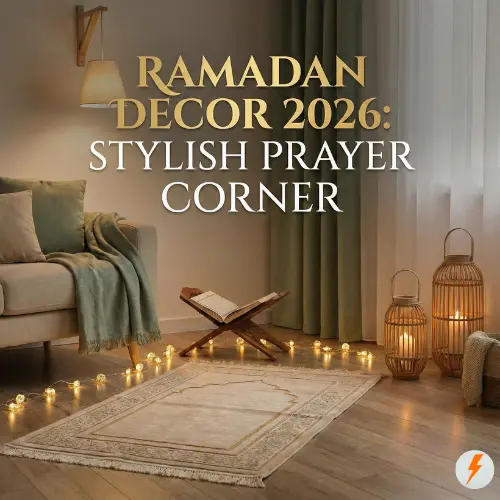
Ramadan 2026 is marking a significant shift in how we approach Islamic home decor. Gone are the days when preparation simply meant hanging a few string lights or placing a lantern on the sideboard. This year, the focus has moved towards creating “intentional spaces”—dedicated sanctuaries within our homes designed to nurture the soul.
Enter the “Prayer Nook” (or Musalla at home). This concept has exploded as the biggest interior trend for Muslim households in 2026. It combines the clean lines of modern minimalism with the warmth of spiritual tradition. It is no longer just about where you pray; it is about how you feel before you even step onto the rug. A designated Islamic corner invites pause, reflection, and tranquility into our chaotic lives.
In this post, we’ll cover exactly how to design a functional, beautiful space for your Ibadah (worship) using the latest 2026 design trends—transforming a simple corner into the heart of your Ramadan experience.
Why Create a Dedicated Prayer Corner?
You might be wondering, “Why do I need a specific spot when I can pray anywhere?” The answer lies in the psychological intersection of design and devotion.
1. Spiritual Benefits: The Psychology of “Khushu”
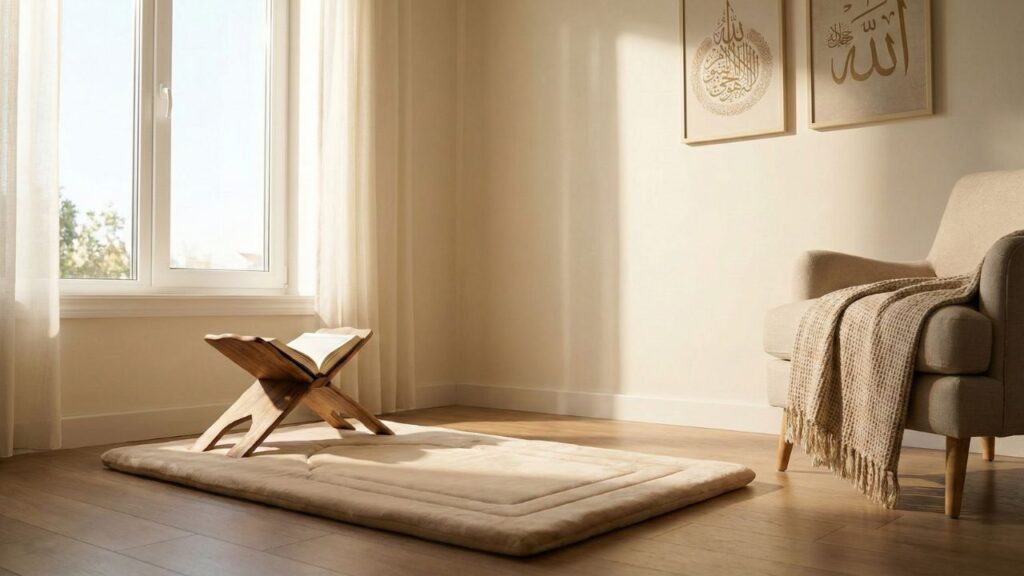
The primary goal of a prayer nook is to aid in Khushu (humility and focus during prayer). When you step into a dedicated sacred space, your brain physically switches modes. Just as a home office signals “work,” a prayer corner signals “worship.” By physically separating your worship area from the daily chaos of the living room TV or the kitchen clutter, you create a mental boundary that allows for deeper spiritual mindfulness.
2. Aesthetic Impact: Elevating “Dead” Space
From a design perspective, a prayer corner is the perfect solution for that awkward, empty spot in your home. Whether it’s a strange alcove or an empty landing, turning a “dead corner” into a focal point of beauty adds value to your interior. It allows you to display Islamic home decor—like tasbih beads, a beautiful Rehal (Quran stand), and lanterns—in a way that feels curated and permanent, rather than temporary clutter.

Step 1: Choosing the Perfect Location
Before you buy a single cushion, you need to select the right real estate in your home. The “perfect” spot balances technical requirements with comfort.
Quiet & Low Traffic
While it might be tempting to set up your corner in the main living area to show it off, this often backfires during prayer times. High-traffic zones are filled with distractions—kids running past, the noise of the TV, or kitchen smells.
- Best Options: A corner of the master bedroom, a guest room that sees little use, or even a wide hallway landing.
- The Goal: Find a space where you can sit for 10 minutes after Fajr without being disturbed.
The Qibla Factor
This is the non-negotiable technical requirement. Before finalizing your layout, use a compass or a Qibla finder app to verify the direction of the Kaaba.
- Design Tip: Ensure your rug can be laid out facing the Qibla without blocking a doorway or forcing you to stare into a messy closet. The flow of the room must accommodate the direction of prayer naturally.
Small Space Solutions for Apartments
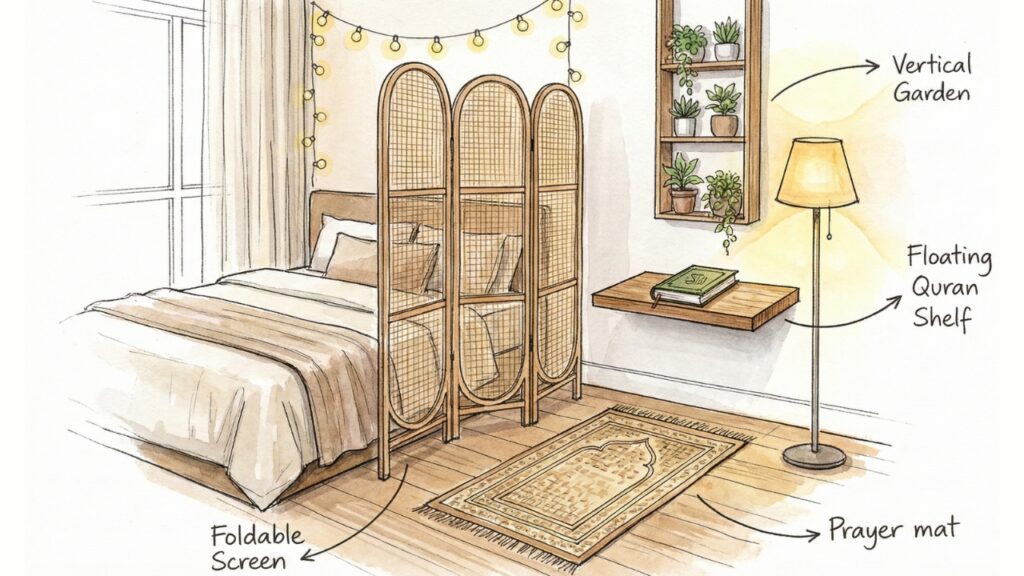
Living in a smaller apartment doesn’t mean you can’t have a sanctuary. In 2026, vertical prayer walls are a massive trend.
- The Closet Conversion: If you have a walk-in closet or a spare cupboard, remove the doors and install soft lighting and shelves to create a hidden “prayer closet.”
- Folding Screens: Use a decorative room divider to slice off a small section of your bedroom. This physically blocks out the sight of your unmade bed or laundry, giving you a private “mini-room” for worship.
Step 2: The Essentials (Function First)
While aesthetics draw us in, functionality keeps us there. A beautiful prayer corner that is uncomfortable or cluttered will eventually go unused. In 2026, the focus is on ergonomics meeting spirituality.
The Prayer Rug (Sejadah): Comfort Meets Minimalism
The days of thin, brightly patterned rugs that distract the eye are fading. The leading trend for luxury prayer rugs in 2026 is the “Quiet Luxury” aesthetic.
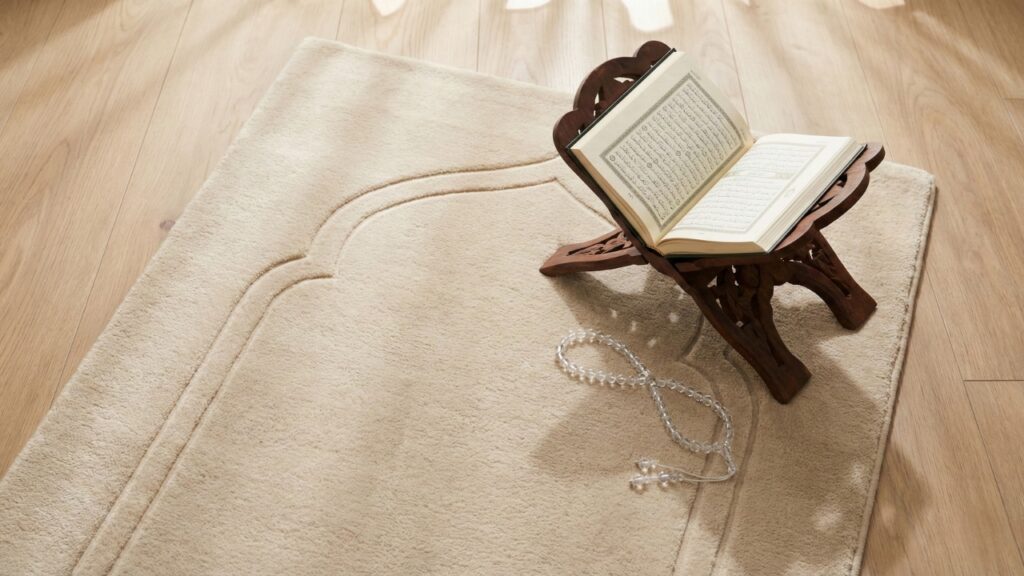
- Texture & Support: Look for memory foam prayer mats or orthopedic rugs. These are essential for joint health, especially during long Taraweeh prayers or for older family members.
- Design: Solid colors in earth tones or subtle, embossed arch shapes are dominating the market. These designs center your focus rather than scattering it.
Quran Storage: Tradition vs. Modernity
Respecting the Quran is paramount, but how we display it has evolved.
- The Rehal (Book Stand): A classic low wooden Rehal is timeless, but 2026 sees a shift toward carved mango wood or acrylic options for a lighter look.
- Floating Shelves: For a cleaner, modern look, install a dedicated floating wall shelf at eye level when seated. This keeps the Holy Book elevated and safe while freeing up floor space.
Seating for Dhikr & Reflection
Your prayer corner isn’t just for the obligatory prayers; it’s a space for reflection (Tafakkur).
- Include a floor cushion, a pouf, or a low ottoman. This encourages you to stay seated after prayer for Tasbih or reading, turning the space into a true retreat rather than a “stop-and-go” station.
Step 3: Ramadan 2026 Decor Trends to Incorporate
This section is where your prayer corner transitions from “standard” to “Pinterest-worthy.” To truly capture the Ramadan 2026 design trends, you need to speak the language of current interior design: warmth, nature, and restraint.
The Color Palette of 2026
We are seeing a departure from the stark whites and greys of previous years.
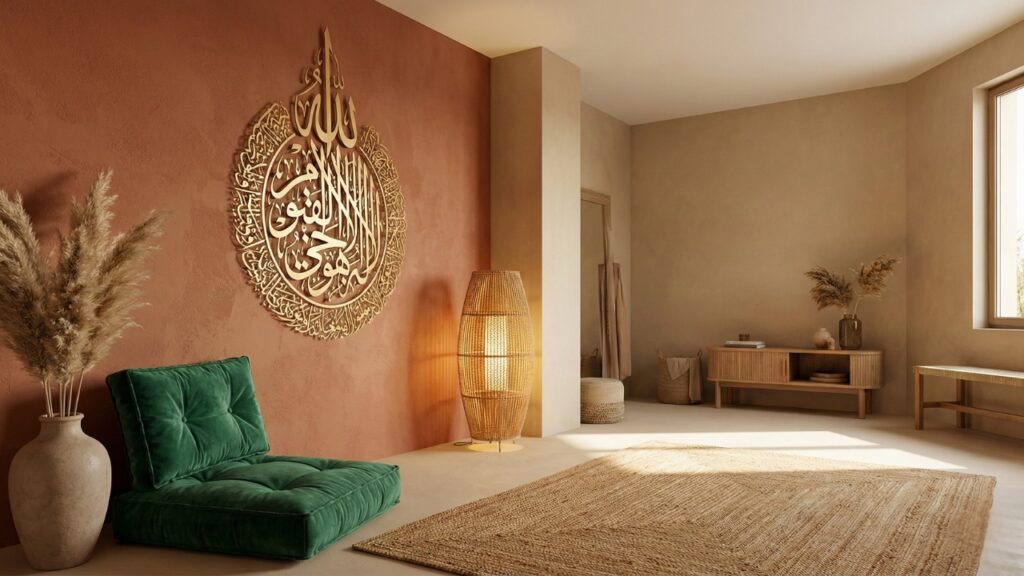
- Warm Neutrals: The base of your corner should be grounded in “warm neutrals”—think creamy Beige, soft Taupe, and rich Terracotta. These colors evoke a sense of earthiness and calm.
- Deep Accents: Contrast the neutrals with jewel tones. A Deep Emerald Green or a Navy Blue accent wall or cushion cover adds depth and regality, symbolizing the spiritual richness of the month.
Sustainable & Natural Materials
Eco-friendly Ramadan decor is not just a buzzword; it’s a lifestyle shift. In 2026, plastic is out; organic is in.
- Textures: Incorporate Rattan baskets for storing headscarves or caps. Use Linen throws or rug underlays for breathability.
- Decor: Swap shiny plastic ornaments for paper-mache lanterns, unpolished wood accents, or dried floral arrangements (like pampas grass or dried palm leaves) to bring a touch of nature indoors.
Modern Islamic Art
Wall decor is moving away from heavy, ornate gold frames.
- The Trend: 3D Metal Wall Art and laser-cut wooden calligraphy are huge. These pieces float slightly off the wall, creating shadows that change throughout the day.
- The Style: Look for “Kufic” script or abstract Islamic geometry. It feels contemporary and fits perfectly into a modern home without overwhelming the visual space.
Step 4: Lighting the Space (The Mood Maker)
Lighting is the single most important factor in creating a spiritual ambiance. You want to mimic the soft, serene glow of a mosque at dawn, not the harsh glare of a supermarket.
Layered Lighting
Never rely on a single overhead bulb. Layered lighting allows you to adjust the mood.
- Task Lighting: A sleek, adjustable floor lamp is necessary for reading the Quran during late-night Qiyam.
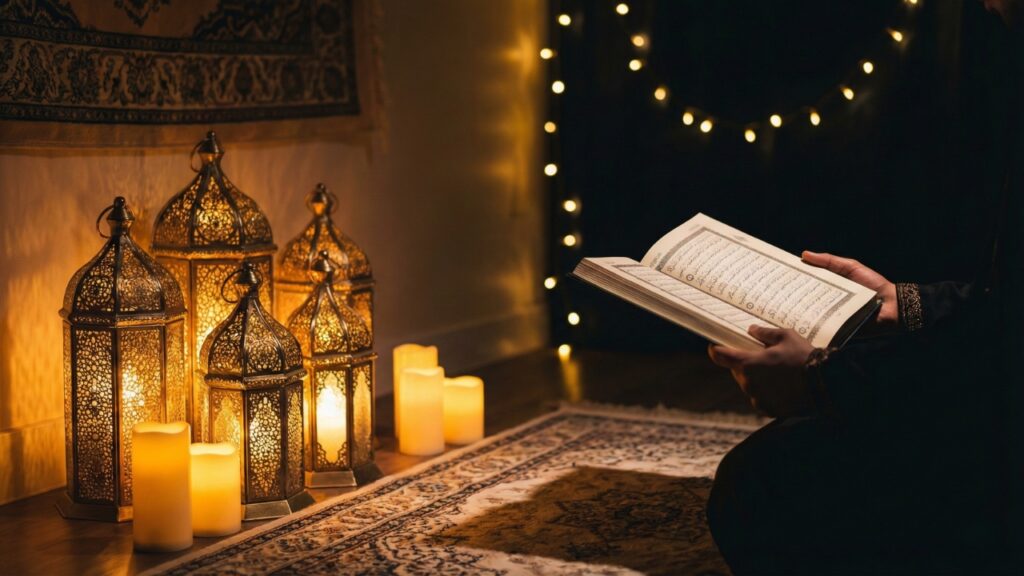
- Ambient Lighting: Use warm-white string lights draped over a screen or a shelf to create a soft, magical glow that feels welcoming.
The Lantern (Fanous) Update
The traditional Fanous is iconic, but the styling has changed.
- Instead of hanging them from the ceiling, style large, geometric lanterns on the floor. Group them in clusters of three (varying heights) in the corner of your prayer nook. This grounds the space and adds a modern architectural element.
Candles: Safety Meets Serenity
For those long nights of worship, safety is key.
- LED Flameless Candles are a must-have for 2026. High-end versions now come with real wax exteriors and “flickering” wicks. They provide the soothing, meditative flicker of fire without the risk of an open flame near your prayer clothes or curtains.
Step 5: Sensory Details (Scent & Sound)
A truly immersive prayer corner engages all five senses. In 2026, “Scentscaping”—the art of using fragrance to trigger a specific emotional state—is a major wellness trend.
Scentscaping: The Smell of Sanctuary
Smell is the only sense directly linked to the memory center of the brain. By using a specific scent only for worship, you condition your brain to enter a state of Khushu (focus) the moment you smell it.
- The 2026 Trend: Move away from heavy, overpowering perfumes. The trend this year is “White Oud“ and “Soft Amber“—cleaner, lighter versions of traditional scents.
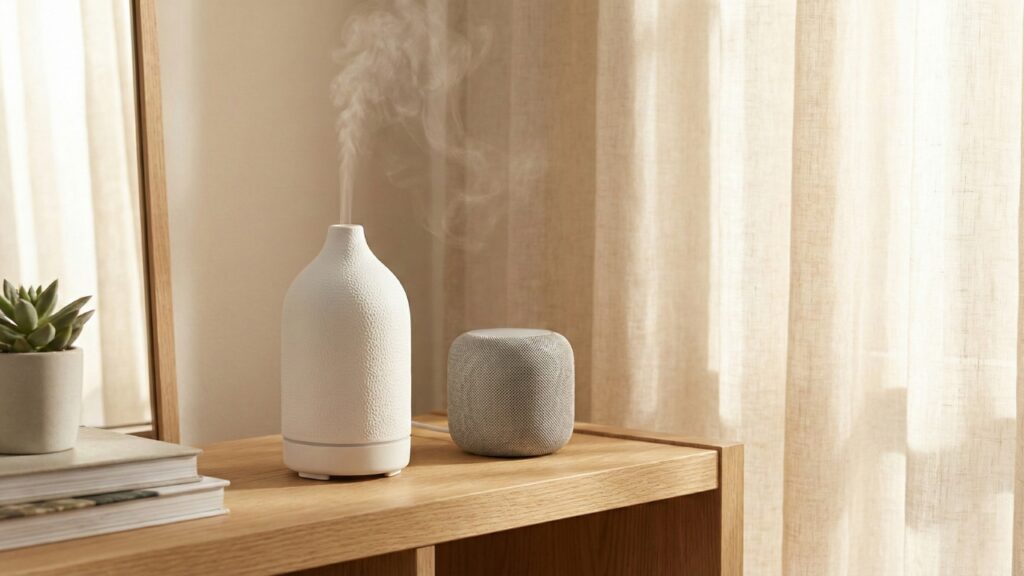
- Application: Use a reed diffuser for a constant, subtle background scent, or a cold-air diffuser for a luxury, spa-like feel without the smoke of traditional bakhoor.
Sound: Biophilic & Spiritual Audio
Silence is golden, but soft audio can drown out household noise.
- The Setup: Hide a small, fabric-covered Bluetooth speaker behind a plant or book.
- The Playlist: Curate a playlist of soft Quran recitations (like Surah Ar-Rahman) or nature sounds (rain, wind) to play at a low volume 10 minutes before prayer time to prepare your heart.
Tips for Maintaining Your Prayer Corner
Building the space is easy; keeping it sacred is the challenge.
Decluttering: The “Digital Detox” Zone
Treat this corner as a “No-Phone Zone.”
- Design Solution: Place a small, decorative basket or box at the entrance of your nook specifically for phones. Physically dropping your phone in the basket becomes a ritual of disconnecting from the world to connect with the Creator.
Scent & Cleanliness (Ritual Purity)
In Islam, cleanliness (Tahara) is half of faith.
- The Routine: Keep a small lint roller and a bottle of fabric refresher spray (linen or musk scented) in a hidden drawer nearby. Dust the shelves weekly and vacuum the rug exclusively—don’t walk on it with shoes. This respect for the physical space translates to spiritual respect.
Frequently Asked Questions (FAQ)
If you don’t have extra floor space, go vertical. Use a wall-mounted floating shelf for your Quran and beads. For the rug, use a foldable prayer mat that can be tucked into a decorative basket when not in use. You can also use a folding room divider to temporarily “create” a wall during prayer times, then fold it away.
According to color psychology and 2026 trends, Sage Green and Warm Beige are the best choices. Green has deep roots in Islamic tradition and promotes tranquility and balance, while beige minimizes visual distractions, helping you focus better during Salah. Avoid bright reds or neon colors, which can induce anxiety.
Adopt the “One Focal Point” rule. Instead of covering every surface with trinkets, choose one statement piece—like a large piece of metal wall art or a cluster of floor lanterns. Rotate your decor: keep the space minimal during the year and add only the lanterns and special lighting during Ramadan to make the month feel distinct and special.
Conclusion
Creating a stylish “Prayer Corner” for Ramadan 2026 is about more than just following a trend. It is an investment in your spiritual mental health. By carving out a physical space for worship, you are prioritizing your relationship with Allah amidst the busy demands of modern life.
Whether you have a sprawling majlis or a tiny apartment nook, the intention behind the space matters more than the square footage. Start small, focus on comfort and cleanliness, and watch how this little corner transforms your Ramadan experience.
We want to see your creativity! Snap a photo of your setup and tag us on Instagram @rushlet_ with your #Ramadan2026PrayerNook. We’ll be sharing our favorites all month long!