
Introduction
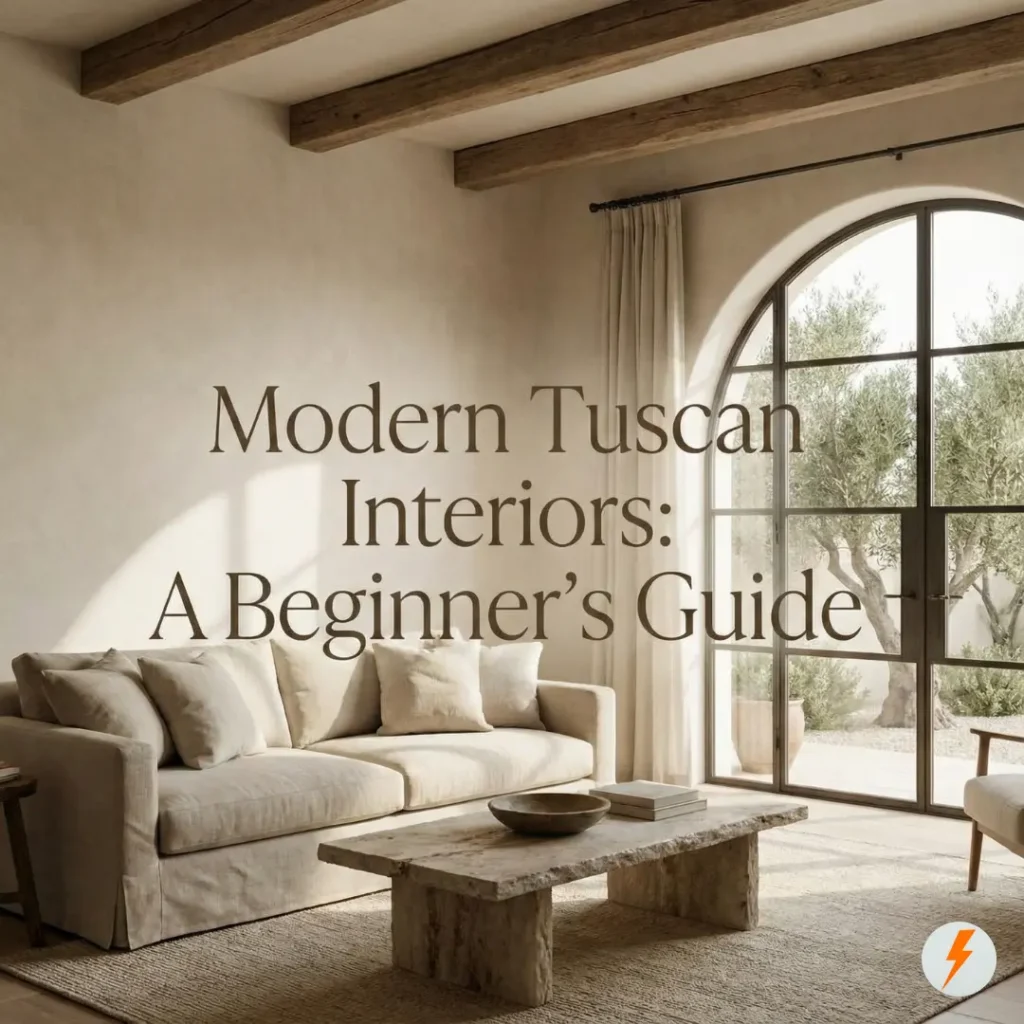
Close your eyes and picture the Italian countryside. You’re likely imagining sun-drenched hills, rows of olive trees, and stone farmhouses that seem to have grown right out of the earth. It is a place where life moves more slowly, and the homes feel warm, lived-in, and effortlessly elegant. Now, imagine bringing that exact feeling into your home—without buying a plane ticket.
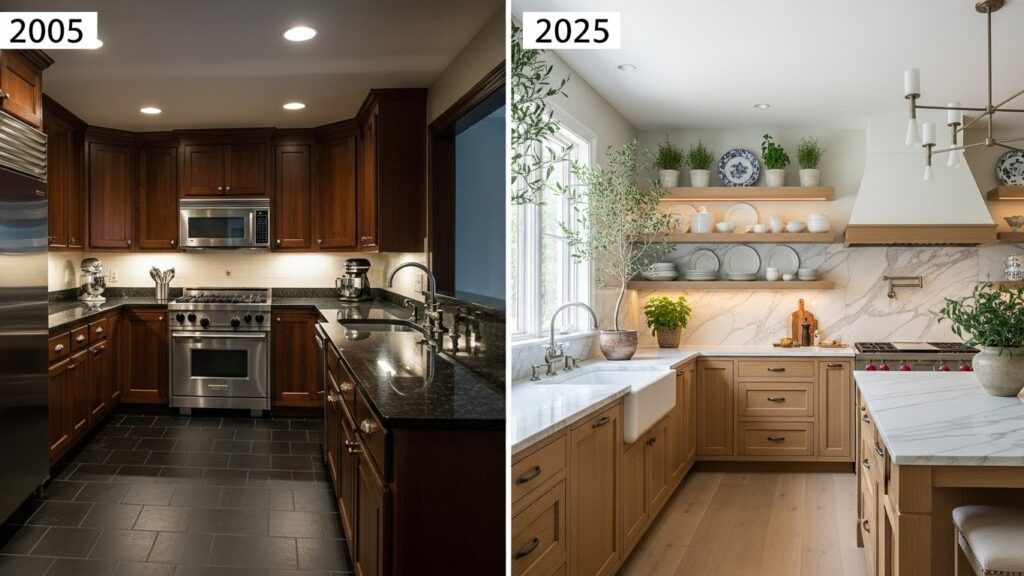
For many of us in the US, the phrase “Tuscan Decor” triggers a specific (and slightly traumatic) memory from the early 2000s. We remember dark, cave-like kitchens, heavy burgundy drapes, oversized leather furniture, and those faux-finish walls that looked more like a themed restaurant than a home. That heavy, cluttered “Old World” look is what scares many people away from this style today.
But here is the good news: Modern Tuscan interior design has undergone a massive evolution. The new Mediterranean aesthetic has shed the weight of the past. It has traded dark clutter for “warm minimalism” and heavy fabrics for breezy linens. It preserves the romance and history of Italy but translates it through a clean, contemporary lens.
In this guide, we will break down the essential elements of modern Tuscan interiors and show you exactly how to master this sophisticated, rustic-refined aesthetic in your own home.
What is Modern Tuscan Interior Design?
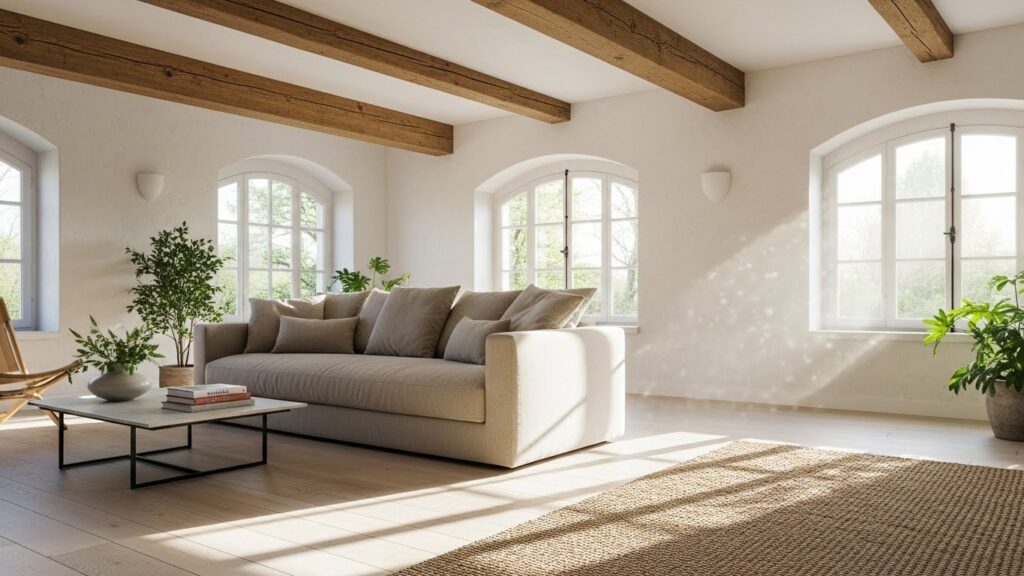
At its core, Modern Tuscan interior design is the balance between rustic warmth and refined simplicity. It draws inspiration from the stone villas and farmhouses of Central Italy but strips away the ornamentation. It is not about “decorating” with props; it is about highlighting natural materials, architectural bones, and a sense of calm. Think of it as Italian farmhouse meets California cool.
Key Characteristics
To get this look right, you need to focus on the foundation rather than just the accessories.
- Architectural Emphasis: The style relies heavily on structural details like arches, exposed wood beams, and deep window sills.
- “Perfectly Imperfect” Textures: Smooth, flat drywall is replaced by tactile surfaces. Limewash walls, plaster finishes, and tumbled stone add depth and age without feeling dirty or dated.
- Warm Minimalism: Unlike the clutter of the 2000s, modern Tuscan homes embrace open space. Every piece of furniture has room to breathe, creating an airy, sanctuary-like atmosphere.
Modern Tuscan vs. Traditional Tuscan
If you are unsure where the line is drawn, here is the cheat sheet:
| Feature | Traditional (Early 2000s) | Modern Tuscan (2025) |
| Lighting | Dark, dim, and heavy | Bright, natural, and airy |
| Wood Tones | Dark espresso & cherry red | Blonde oak, walnut & reclaimed wood |
| Walls | Heavy brown/gold faux glaze | Soft white plaster or creamy limewash |
| Decor | Themed (grapes, roosters, ivy) | Organic (clay pots, olive branches, stone) |
| Metals | Shiny brass or chunky iron | Matte black iron or unlacquered brass |
The Color Palette: Earthy and Sun-Baked
The secret to the Modern Tuscan color palette is warmth. While modern design often leans cool (think grey and stark white), Tuscan design is unapologetically warm. However, unlike the saturated golds and reds of the past, the modern version is muted and matte.
The Base: Warm Neutrals
Your canvas should mimic the limestone and plaster found in Italian villas. Avoid “hospital white” at all costs. Instead, opt for:
- Creamy Whites: Soft and inviting, serving as the perfect backdrop.
- Warm Beiges & Taupes: These bridge the gap between grey and brown, grounding the space.
The Accents: Pulled from Nature
When adding color, look to the Italian landscape for inspiration. These shades should feel “sun-baked”—meaning they look like they have faded gently in the sun over decades.
- Terracotta: The signature color of Tuscany. Use it in floor tiles, pottery, or throw pillows. It adds a rich, rusty warmth that anchors a neutral room.
- Olive Green: This is your primary connection to nature. Use muted olive tones for cabinetry or velvet upholstery to bring the outdoors in.
- Sienna and Ochre: Think of the yellow-gold of dried sunflowers or the deep reddish-brown of the soil. These work best as subtle accents in art or rugs.
- Iron Black: Used sparingly in light fixtures or curtain rods, black provides a necessary modern contrast to the soft, warm tones.

Here is the continuation of your guide, covering the Key Elements, Room-by-Room breakdown, and Styling Tips. I have maintained the SEO focus, ensuring keywords like travertine tile, limewash walls, and modern Tuscan kitchen are integrated naturally.
5 Key Elements of Modern Tuscan Decor
To truly capture the essence of modern Tuscan decor, you must look beyond furniture and focus on the “bones” of the room. The goal is to create a space that feels grounded and permanent.
1. Natural Materials are King
In a modern Tuscan home, synthetics are the enemy. The entire aesthetic relies on the honesty of materials.
- Stone: Use marble, limestone, or travertine for countertops and fireplace surrounds. The key is the finish: always choose honed or matte finishes over polished. A shiny, reflective surface feels too glam and modern; a matte surface feels aged and authentic.
- Wood: Incorporate reclaimed wood beams or furniture pieces. The wood should show its grain and imperfections.
- Wrought Iron: Thin, black iron accents in curtain rods or stair railings provide a necessary graphic element that contrasts beautifully with soft stone.
2. Walls with Texture
If there is one hallmark of this style, it is that flat, painted drywall is rarely enough. You need to add depth to your walls to mimic the plaster walls of an Italian farmhouse.
- Limewash Paint: This is the easiest DIY update. Limewash Paint creates a cloudy, velvety texture that changes with the light, instantly adding “age” to a new home.
- Plaster Finishes: For a more permanent solution, Venetian plaster or a “German smear” on brick adds physical texture that feels incredibly high-end.

3. Architectural Curves
Straight lines can feel rigid. The Mediterranean aesthetic softens the home with curves that mimic the rolling hills of Tuscany.
- Arches: If you are renovating, adding an arched doorway between the kitchen and dining room is a game-changer.
- The Renter-Friendly Option: If you can’t knock down walls, introduce curves through arched floor mirrors, curved sofas, or rounded coffee tables.
4. Rustic Flooring
Your floors set the stage for the entire house.
- Travertine Tile: This natural stone is having a massive comeback. Its creamy, beige tones are perfect for a modern Tuscan home.
- Terracotta Tiles: For a warmer, more traditional look, authentic terracotta (especially in a hexagonal shape) brings immediate character.
- Wide-Plank Oak: If you prefer wood, choose wide planks with a light, natural stain. Avoid red or orange undertones; stick to neutral browns.
5. Old World Lighting
Lighting is the “jewelry” of the room, but in Tuscan design, it should look antique.
- Oversized Lanterns: Use large, glass and iron lanterns above a kitchen island.
- Ceramic Sconces: Replace standard fixtures with unglazed ceramic sconces that blend into the wall texture.
- Iron Chandeliers: A simple, tiered iron chandelier (without crystals) creates a stunning focal point in a living room or entryway.
Room-by-Room Guide to Modern Tuscan Style
The Modern Tuscan Kitchen
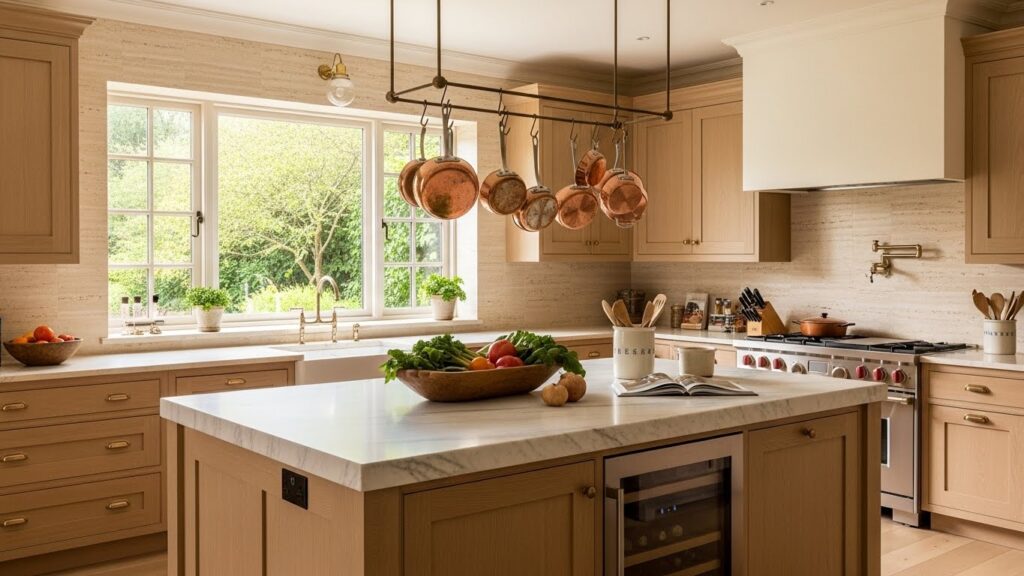
The kitchen is the heart of the Italian home. To achieve the modern Tuscan kitchen look, you want a space that feels like it’s been there for 100 years but functions perfectly for today.
- Cabinetry: You have two main routes here. One is natural wood cabinets (white oak or walnut) to bring in warmth. The other is painting cabinets in a creamy mushroom or putty color. Avoid stark white.
- Backsplash: skip the subway tile. Instead, carry your countertop stone up the wall as a slab backsplash, or use tumbled travertine tiles for texture.
- The Centerpiece: If space allows, a large farmhouse table often replaces the kitchen island in traditional Italian homes. If you need an island, make it look like a piece of furniture with legs rather than a solid block.
The Living Room
This room should be the epitome of cozy refinement.
- Furniture: Anchor the room with an overstuffed, white linen sofa. Low-profile furniture works best to keep the room feeling tall and airy.
- The Ceiling: If you have high ceilings, installing faux wooden beams is one of the most impactful changes you can make to get the Tuscan vibe.
- Focal Point: A stone or plaster fireplace mantel is essential. Keep the mantel styling simple—perhaps just a single antique vase or a leaning piece of art.
The Bedroom
Your bedroom should feel like a sanctuary at a boutique hotel in Florence.
- The Bed: A simple black iron bed frame is a classic choice. Alternatively, a linen upholstered headboard in oatmeal or sage green works beautifully.
- Bedding: Layering is key. Start with crisp white cotton sheets and layer on a heavy linen duvet and a chunky wool throw at the end of the bed.
- Nightstands: Mismatching your nightstands (e.g., a vintage wooden chest on one side and a round stone table on the other) adds that “collected over time” feel.
Bringing the “Mediterranean Aesthetic” to the USA (Styling Tips)
You don’t need a full renovation to capture this vibe; sometimes simple updates like new wall art or a DIY textured vase are enough. For more inspiration on refreshing your space on a budget, check out these 10 ideas for home aesthetic DIY decor.
Mix Old and New
A purely modern room feels cold; a purely antique room feels like a museum. The magic of modern Tuscan interiors lies in the mix.
- The Formula: Pair a sleek, modern sofa with a distressed vintage Turkish rug. Place a contemporary abstract painting above an antique wooden console table. This tension between eras creates visual interest.
Textiles Matter
Fabric choice is crucial for the tactile experience of the room.
- Go Natural: Stick to 100% linen and cotton. These fabrics wrinkle naturally, which adds to the relaxed, unpretentious vibe.
- Avoid Shine: Keep velvet, silk, or polyester out of the main living areas. The goal is matte, organic textures that feel good against the skin.
Greenery: The Finishing Touch
No Italian home is complete without a connection to nature.
- Olive Trees: A potted olive tree (real if you know how to care for them indoors, or high-quality faux if you don’t) is the quintessential Tuscan accessory. The dusty green leaves perfectly complement the neutral color palette.
- Kitchen Herbs: Keep terracotta pots filled with rosemary, basil, or thyme on your kitchen counter. It’s practical decor that smells amazing.
Outdoor Living
In Tuscany, the line between indoors and outdoors is blurred.
- Connect the Spaces: Use French doors or large sliders to open your living space to the patio.
- The Patio: Even a small concrete slab can feel Tuscan with the right styling. Add a bistro set, string lights, and oversized terracotta planters to create a Mediterranean patio vibe right in the suburbs.

Common Mistakes to Avoid
Achieving the Modern Tuscan aesthetic is a delicate balancing act. It is easy to veer off course and end up with a room that feels dated or disjointed. Here are the three most common pitfalls to avoid.
1. Over-Theming (The “Theme Park” Trap)
The biggest mistake homeowners make is treating this style like a costume for their house.
- The Error: Filling your kitchen with “on-the-nose” accessories like rooster statues, fake plastic grapevines on top of cabinets, or signs that say “Cucina.” This instantly makes the space look cheap and dated.
- The Fix: Subtlety is key. Instead of a painting of a wine bottle, display a real, vintage wine jug on a shelf. Instead of fake ivy, place fresh rosemary in a simple glass jar. Let the architecture and materials speak for themselves without needing literal props.
2. Going Too Dark
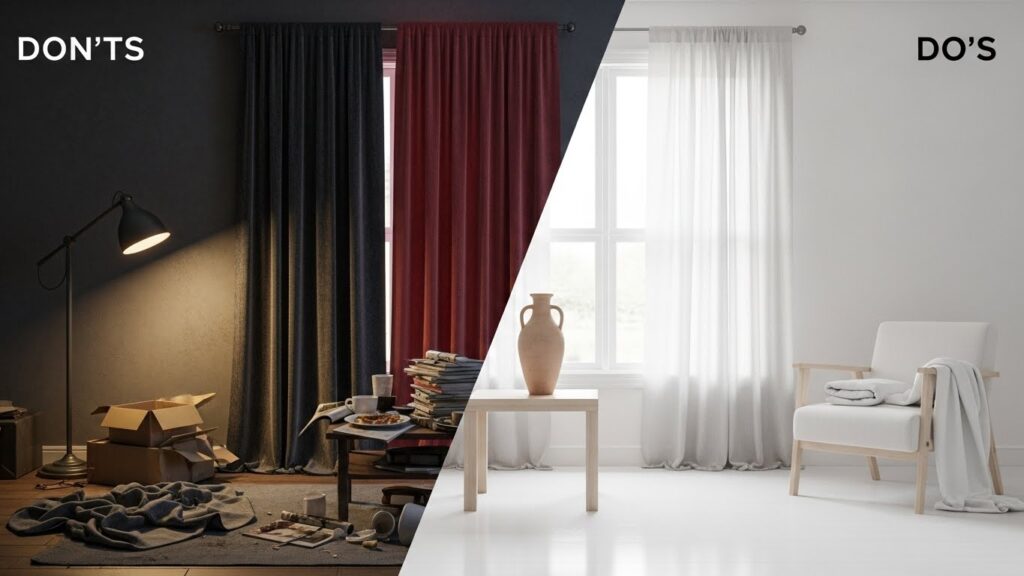
Traditional Tuscan design from the early 2000s was infamous for being dark, heavy, and cave-like.
- The Error: Using heavy burgundy drapes, dark espresso wood floors, and deep gold paint all in one room. This absorbs all the light and makes the home feel smaller.
- The Fix: Remember the “Modern” in Modern Tuscan. Keep your walls light (creams, whites, and pale plasters) to reflect natural light. If you use dark wood for furniture, balance it with light floors and white linen curtains. The goal is a space that feels sun-drenched, not shadowy.
3. Ignoring Scale and Weight
Mediterranean homes are built with stone and solid wood; they have “visual weight.”
- The Error: Filling a room with spindly, thin-legged furniture. Dainty, mid-century modern pieces often look weak and out of place against textured limewash walls or stone floors.
- The Fix: Choose substantial furniture. Look for sofas that sit low to the ground, thick wooden dining tables, and large oversized rugs. Your furniture needs to feel grounded enough to stand up to the rustic architectural elements.
Conclusion
Embracing Modern Tuscan interior design is about more than just following a trend; it is about cultivating a lifestyle. It is a shift away from the fast-paced, disposable nature of modern life toward something slower, warmer, and more intentional.
By combining the rustic charm of the Italian countryside with the clean lines of modern minimalism, you create a home that feels timeless. Whether you are fully renovating your kitchen with travertine stone or simply swapping out your throw pillows for earth-toned linens, every change brings you closer to that sun-baked Mediterranean feeling.
Ready to transform your home? Start small by incorporating a limewash feature wall in your entryway to test the texture, or discover more lifestyle and aesthetic inspiration at Rushlet.blog.