

You’ve invested hundreds — sometimes thousands — of dollars into your tattoo. The linework is crisp, the colors are bold, and you’re ready to show it off poolside. But before you grab your beach bag, there’s one thing you need to know: the sun is the single most destructive force your tattoo will ever face.
UV radiation doesn’t discriminate. Every hour you spend unprotected at the beach, ultraviolet rays are silently penetrating your skin and breaking down the very ink particles that make your tattoo look sharp. That rich black linework? It turns soft and greenish. Those vivid reds and oranges? They wash out to a muted shadow of what they once were. Fading is irreversible without touch-ups — and touch-ups cost money.
The good news: tattoo fading from sun exposure is almost entirely preventable with the right habits. This guide covers exactly how to keep tattoos from fading in the sun — from the science behind UV damage, to the best sunscreen for tattoos in 2026, to a complete beach-day routine that protects your ink all season long.
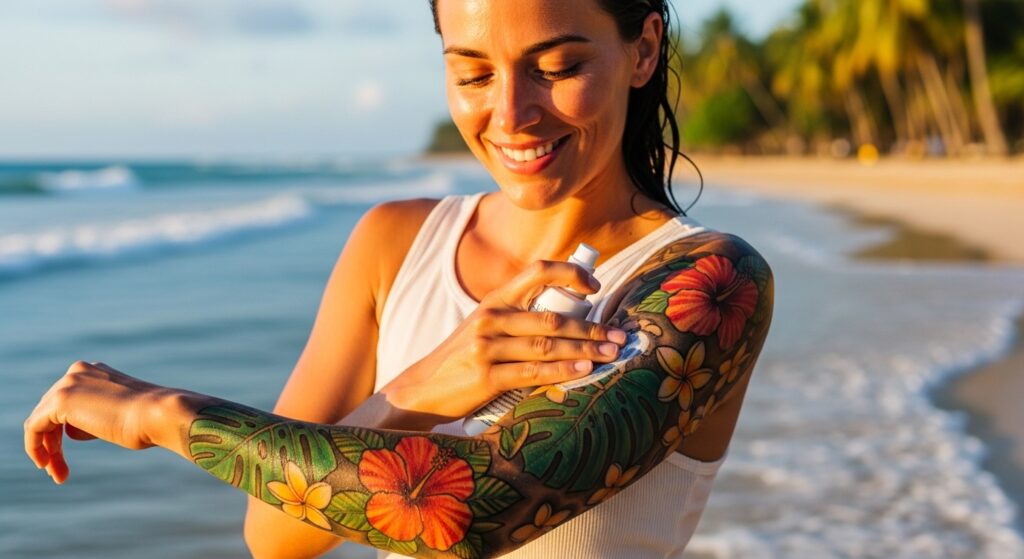
Why the Sun is Your Tattoo’s Worst Enemy
The Science of Fading
When your skin is exposed to sunlight, two types of ultraviolet radiation come into play:
- UVB rays cause sunburn and damage the outermost skin layers.
- UVA rays — the real villain — penetrate deep into the dermis, the layer where tattoo ink permanently lives.
Once UVA rays reach the dermis, they trigger a chemical reaction that breaks ink pigment particles into smaller fragments. Your immune system, sensing foreign particles, dispatches macrophages (white blood cells) to absorb and carry those fragments away. Over time, your tattoo literally disappears — cell by cell — through your own immune response.
Repeated, unprotected sun exposure compounds this damage exponentially. A tattoo that fades 10% in one summer without protection might have faded only 1% with proper SPF use. This is why dermatologists universally recommend daily sunscreen on all tattooed skin exposed to light.
Color Vulnerability
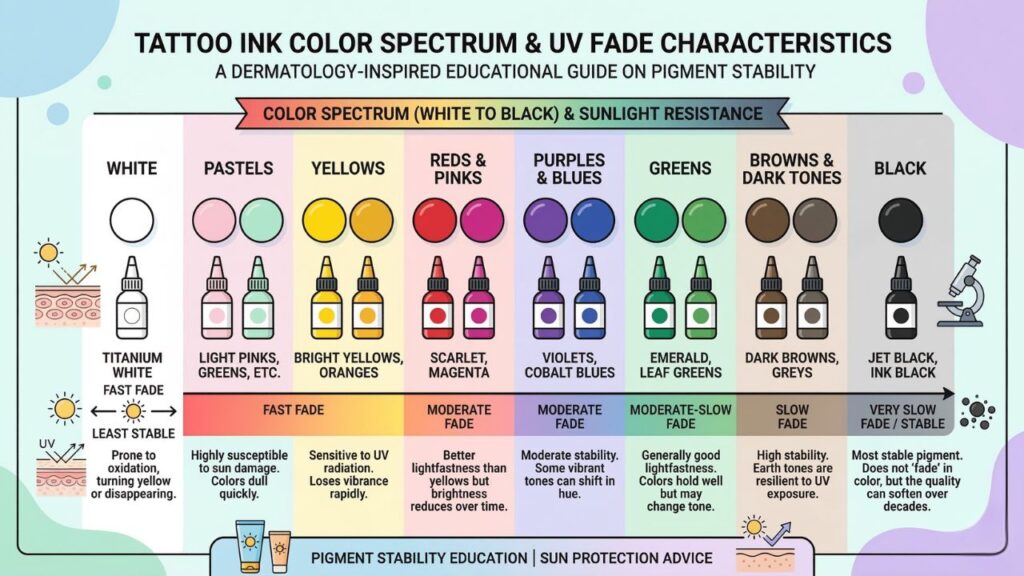
Not all ink fades at the same rate. Understanding which colors are most vulnerable helps you prioritize protection:
| Ink Color | Fade Speed | Why |
|---|---|---|
| White, Yellow, Pastel | Fastest | Light pigments have low UV resistance |
| Red, Orange, Pink | Fast | Organic pigment compounds break down quickly |
| Green, Purple | Moderate | Mid-spectrum pigments have mixed durability |
| Blue | Moderate-Slow | Inorganic pigments hold better |
| Black, Dark Grey | Slowest | Carbon-based ink is most UV-resistant |
Even black ink isn’t immune. Over years without protection, crisp black lines soften, spread slightly, and shift toward a blue-grey or green hue — especially in high UV-exposure regions.
The Golden Rule: New Tattoos vs. Healed Tattoos
Fresh Ink: The Beach Is Off-Limits (First 4–6 Weeks)
A brand-new tattoo is not just body art — it is an open wound. The tattooing process uses needles to deposit ink beneath the epidermis, creating thousands of micro-punctures across the skin. Until those punctures fully close and the skin regenerates, your tattoo is in a vulnerable, healing state.
Why you must NEVER apply sunscreen to a healing tattoo:
- Sunscreen ingredients (especially chemical filters like oxybenzone or avobenzone) can penetrate open skin, irritate the wound, and introduce bacteria.
- Thick, occlusive SPF formulas can clog the pores around healing skin, trapping bacteria and leading to infection.
- Infection during the healing phase can permanently distort your tattoo — causing patchiness, ink rejection, or scarring.
What to do instead during healing:
- Keep the tattoo completely covered with loose, breathable cotton clothing when outdoors.
- Seek shade aggressively — no direct sun exposure on fresh ink.
- Use only tattoo-specific healing ointments recommended by your artist (like Aquaphor or unscented Lubriderm) for moisture.
- Avoid swimming entirely — pools (chlorine), oceans (salt + bacteria), and lakes all pose serious infection risks.
- After 4–6 weeks, once the skin surface is fully closed, smooth, and peeling has stopped completely, you can begin applying SPF.
Pro tip: When in doubt, ask your tattoo artist. Healing timelines vary based on tattoo size, placement, skin type, and aftercare quality.
Healed Ink: SPF Is Now Non-Negotiable
Once your tattoo is fully healed, sunscreen becomes your most important tattoo care product — more important than any tattoo balm or lotion on the market. Protecting healed ink is not a once-in-a-while habit; it must become part of your daily routine any time that skin is exposed to light.
Daily SPF habits for healed tattoos:
- Apply a broad-spectrum SPF 30+ every single morning to tattooed skin — even on cloudy days (up to 80% of UV rays penetrate cloud cover).
- Reapply every 90–120 minutes during beach or outdoor activities.
- Reapply immediately after toweling off from swimming.
- Don’t forget edges and transition areas around the tattoo border.
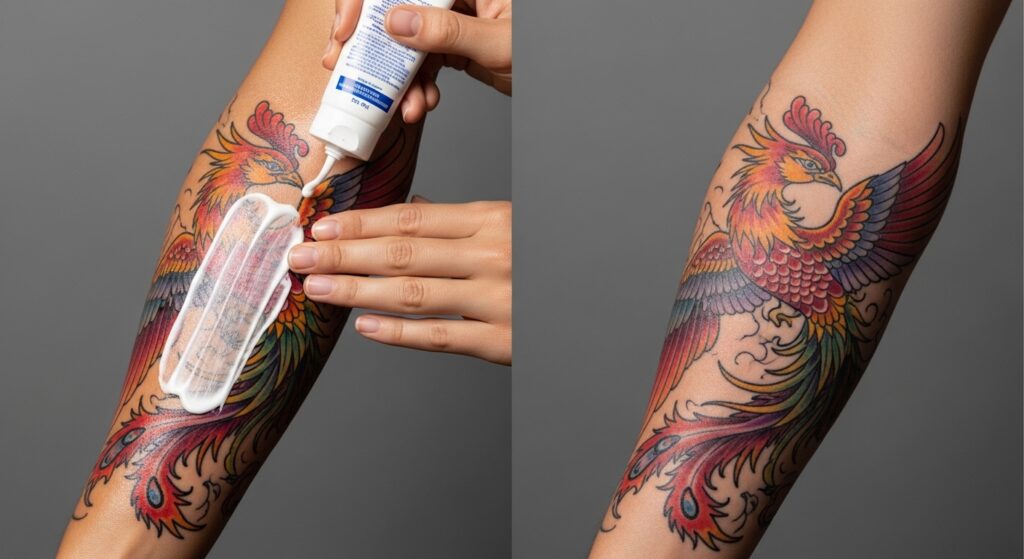
What to Look for in the Best Sunscreen for Tattoos
1. Broad-Spectrum Protection — The Non-Negotiable Foundation
The label “broad-spectrum” means the formula protects against both UVA and UVB rays. This distinction matters enormously for tattoos:
- UVB-only protection prevents burning but does nothing to stop the deep-penetrating rays that degrade your ink.
- Broad-spectrum formulas block the full UV spectrum — giving your tattoo complete defense.
Always verify the “Broad Spectrum” label is present before purchasing any sunscreen for tattooed skin. In the U.S., this label is regulated by the FDA and must meet minimum UVA protection standards to be displayed.
2. SPF 30 or Higher — The Dermatologist Baseline
SPF (Sun Protection Factor) measures UVB blocking efficiency:
| SPF Level | UVB Blocked | Recommended For |
|---|---|---|
| SPF 15 | 93% | Minimal/incidental exposure |
| SPF 30 | 97% | Daily tattoo protection (minimum) |
| SPF 50 | 98% | Beach, extended outdoor activity |
| SPF 100 | 99% | Extreme exposure, very fair skin |
For beach days with tattooed skin, SPF 50 is the practical sweet spot — it offers meaningfully better protection than SPF 30 with no downside in modern formulas. Higher SPF also provides a buffer for imperfect application (most people apply 25–50% less sunscreen than tested amounts).
3. Mineral vs. Chemical Sunscreen: Why Mineral Wins for Tattoos
This is arguably the most important ingredient decision for tattoo protection:
Chemical Sunscreens (avobenzone, oxybenzone, octinoxate):
- Work by absorbing UV radiation and converting it to heat within the skin.
- Can cause skin irritation and allergic reactions, particularly on sensitive tattooed skin.
- Some chemical filters (oxybenzone) may slightly affect pigment over time through heat conversion.
- May feel lighter and more cosmetically elegant.
Mineral Sunscreens (Zinc Oxide, Titanium Dioxide):
- Work by physically reflecting UV rays away from the skin surface — like a mirror.
- Sit on top of the skin rather than penetrating it — ideal for protecting tattooed skin without chemical interaction.
- Zinc oxide is anti-inflammatory and gentle, making it excellent for skin that’s been tattooed.
- Offer natural broad-spectrum protection without chemical boosters.
- Recommended by most tattoo artists and dermatologists specifically for tattoo longevity.
What to look for on the label: “Zinc Oxide” (ideally 15–20%+) or “Titanium Dioxide” as the active ingredient. If you see both, even better.
4. Hydrating Ingredients: Feed the Skin, Protect the Ink
Dry, dehydrated skin causes tattoos to look dull, cracked, and faded — even before UV damage sets in. The best sunscreens for tattoos double as moisturizers, keeping the skin barrier plump, supple, and vibrant.
Key hydrating ingredients to look for:
- Shea Butter — Rich emollient that locks in moisture and softens skin, making tattoo colors appear more vivid and saturated.
- Coconut Oil — Natural moisturizer with antimicrobial properties; helps maintain the skin’s natural barrier.
- Vitamin E (Tocopherol) — A potent antioxidant that neutralizes free radicals generated by UV exposure, providing an additional layer of cellular protection beyond SPF.
- Aloe Vera — Soothes UV-stressed skin and reduces post-sun inflammation that can contribute to fading.
- Glycerin / Hyaluronic Acid — Draws water into the skin for deep hydration that keeps the dermis (where ink lives) healthy and resilient.
Ingredients to avoid in tattoo sunscreens:
- Heavy alcohol content (dries and irritates skin)
- Synthetic fragrances (can cause sensitivity reactions on tattooed skin)
- Petroleum-based occlusives in excessive amounts (can clog pores)
Tattoo SPF Stick & Lotion Reviews 2026 (Best Picks for Protecting Your Ink)
Finding the right sunscreen for tattooed skin isn’t as simple as grabbing whatever’s on sale at the drugstore. After testing formulas across skin types, ink colors, and beach conditions, here are the standout performers in 2026 — broken down by format and use case so you can find exactly what your ink needs.
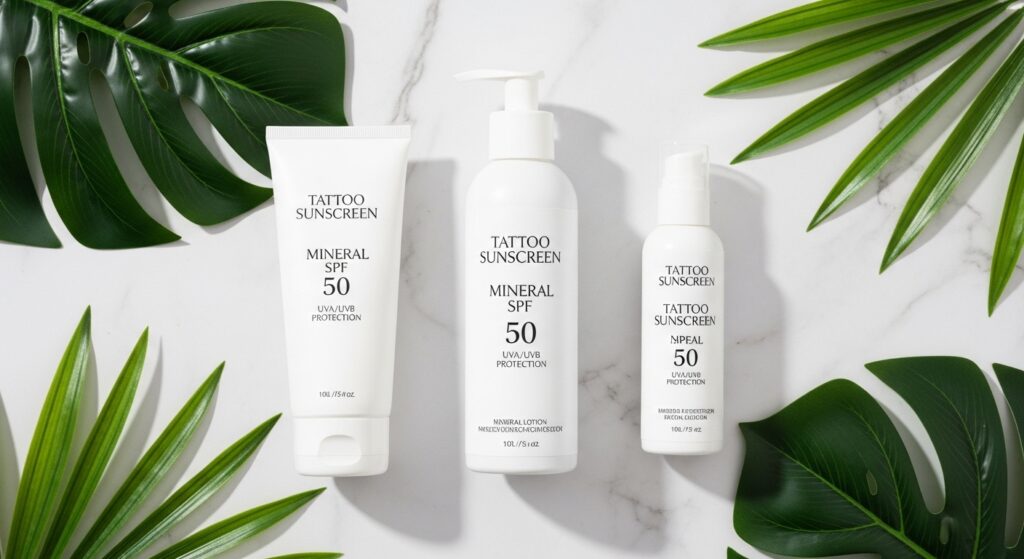
Best Mineral Lotions for Full Body Coverage
If you have large-scale work — full sleeves, back pieces, thigh tattoos — a lotion is your most efficient application tool. The key challenge with mineral lotions has always been the dreaded white cast. Fortunately, 2026 formulations have come a long way.
Mad Rabbit SPF 30 Tattoo Sunscreen Lotion
Mad Rabbit built its entire brand around tattooed skin, and their SPF lotion reflects that focus. The formula uses zinc oxide as its primary active alongside a cocktail of skin-nourishing ingredients — calendula extract, sunflower seed oil, and vitamin E — that work together to keep the skin barrier healthy and the ink underneath it looking saturated and defined.
What sets it apart from generic pharmacy lotions is the texture. It absorbs fast, skips the greasy finish, and leaves almost zero white cast on medium to deep skin tones. On fair skin, there’s a very faint luminous effect that most users describe as flattering rather than chalky.
Pros:
- Formulated exclusively for tattooed skin — every ingredient serves ink protection or skin health
- Zinc oxide base reflects UV rather than absorbing it, reducing heat-related pigment stress
- Deeply moisturizing without clogging pores — colors look visibly brighter after application
- Fragrance-free, making it safe for sensitive or recently healed skin
Cons:
- SPF 30 may feel insufficient for all-day beach sessions — reapplication discipline is essential
- Premium price point compared to drugstore alternatives
- Lotion consistency requires thorough rubbing on larger body areas
Best for: Sleeve tattoos, large back or chest pieces, anyone with sensitive or reactive skin.
Tattoo Goo SPF 50+ Sunscreen
Tattoo Goo has earned its place as a trusted name in tattoo aftercare, and their sunscreen carries that reputation forward. The SPF 50+ rating makes this the stronger choice for genuine beach days where you’re facing peak UV hours between 10 a.m. and 4 p.m. The formula leans into a water-resistant design — it holds up reasonably well through light swimming and sweating, though no sunscreen is truly waterproof and reapplication remains mandatory.
The lotion is slightly thicker than Mad Rabbit’s, which some users appreciate as it creates a more noticeable protective layer on the skin. It contains aloe vera and vitamin E to keep tattooed skin hydrated through long sun exposure.
Pros:
- SPF 50+ rating offers stronger protection for peak-sun beach hours
- Water-resistant formula holds up through swimming and sweat better than lighter lotions
- Aloe vera base soothes UV-stressed skin in real time
- Widely available online and in tattoo shops
Cons:
- Thicker consistency can leave a slightly heavier feel on skin in humid weather
- Mild white cast on darker skin tones
- Scented version available — double-check you’re purchasing the unscented formula if skin-sensitive
Best for: Full-day beach sessions, high UV index days, tattooed skin that tends to dry out quickly.
Hustle Butter Luxury SPF Lotion
Hustle Butter earned a cult following as a healing balm, and their SPF extension maintains that luxurious, skin-first philosophy. This formula blurs the line between sunscreen and skincare — it’s rich, nourishing, and leaves tattooed skin with a healthy, almost glowing finish. The shea butter and mango butter base means deep, lasting hydration that makes tattoo colors appear more vivid and high-contrast than they do without product.
Pros:
- Exceptionally moisturizing — ideal for tattooed skin prone to dryness or flaking
- Natural butter base (shea, mango, coconut) means clean, skin-friendly ingredients
- Tattoo colors genuinely look more vivid and defined after application
- Great option for daily use beyond beach days
Cons:
- Rich formula can feel heavy in hot, humid beach conditions
- Better suited as a pre-beach moisturizer + SPF combo than a standalone sport sunscreen
- Not the strongest choice for heavy water exposure
Best for: Tattooed skin that’s been struggling with dryness or dullness; also excellent as a daily SPF moisturizer outside of beach use.
Best Tattoo SPF Sticks for Quick Beach Touch-Ups
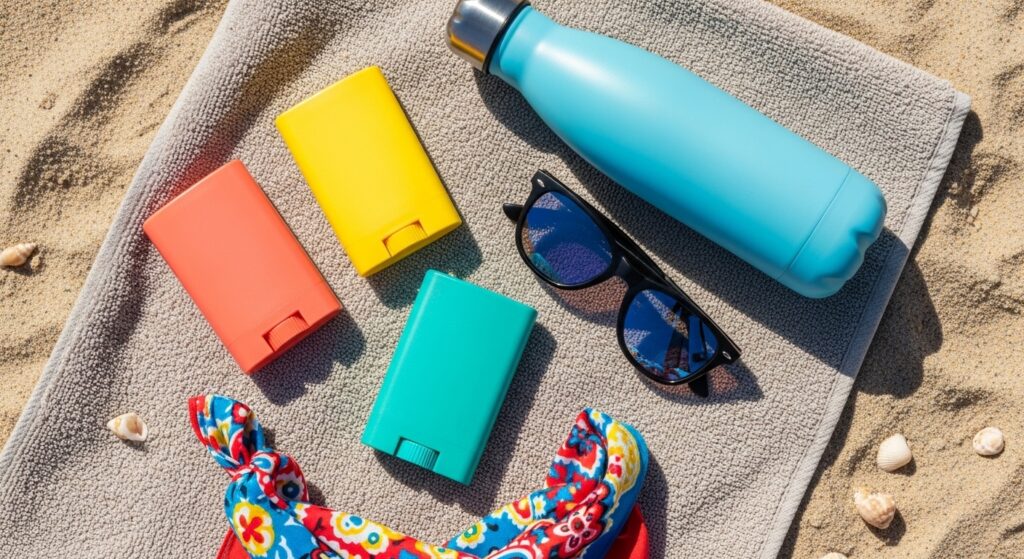
Here’s a beach scenario most tattooed people know too well: you’ve been in and out of the water all afternoon, your lotion has long washed off, and reapplying a full-body lotion while sandy and wet sounds like an absolute nightmare. That’s exactly what SPF sticks were designed for.
Sticks are compact, no-mess, and allow precise targeted application — which makes them especially valuable for protecting a specific forearm piece, a collarbone tattoo, or detailed linework on the hand without getting product everywhere. They’re also TSA-friendly and won’t leak in your beach bag.
Shiseido Clear Sunscreen Stick SPF 50+
Shiseido’s clear stick formula is arguably the gold standard in this category. The “clear” claim actually holds up — it goes on transparent with zero white residue, making it particularly valuable for darker skin tones or anyone with vivid, multicolored tattoos where a white cast would visually interfere. The texture glides smoothly over linework without dragging or pilling, and the water-resistant formula is rated to hold for up to 80 minutes in water — the best-in-class standard for water resistance testing.
Pros:
- Genuinely clear application — no white cast on any skin tone
- SPF 50+ with 80-minute water resistance rating
- Compact and beach-bag friendly — no leaking, no mess
- Smooth glide texture applies evenly over detailed tattoo linework
- Weightless feel — won’t interfere with tattoo’s visual appearance
Cons:
- Higher price point than drugstore sticks
- Smaller product volume than drugstore competitors
- Chemical sunscreen formula — not the right choice for those committed to mineral-only protection
Best for: Detailed tattoos with fine linework, touch-ups over existing lotion application, and anyone who prioritizes a clean, invisible finish.
Neutrogena Sheer Zinc Mineral Sunscreen Stick SPF 50
For those who want the clear-stick format with mineral protection, Neutrogena’s zinc stick is the practical middle ground. It’s formulated with zinc oxide as the active ingredient, offering that physical UV reflection — but in a stick format that makes targeted application fast and clean. The “sheer” formula has improved dramatically from earlier versions and now blends out with minimal white residue when rubbed in briefly.
Pros:
- Mineral zinc oxide formula — physical UV protection ideal for tattooed skin
- SPF 50 rating suitable for full beach day use
- Drugstore pricing makes it accessible for regular reapplication
- No fragrance — skin-friendly for reactive or sensitive tattooed skin
- Solid format travels well without TSA restrictions
Cons:
- Requires slightly more rubbing than the Shiseido stick to eliminate white cast
- Waxy texture on application — takes 15–20 seconds to become skin-like
- Slightly drier formula compared to lotion options
Best for: Beach bag reapplication hero — keep one of these in your bag and reapply over any lotion base after toweling off from the ocean.
CeraVe Hydrating Sunscreen Stick SPF 50
CeraVe brings its signature ceramide-first philosophy to this stick, which makes it stand out from the purely protective alternatives. The formula contains ceramides 1, 3, and 6-II alongside hyaluronic acid — ingredients that actively reinforce the skin barrier rather than simply sitting on top of it. For tattooed skin that’s been exposed to salt water, wind, and sun across a full beach day, that skin-barrier support translates directly to retained tattoo vibrancy.
Pros:
- Ceramide and hyaluronic acid complex keeps tattooed skin deeply hydrated during application
- SPF 50 with dermatologist-tested, fragrance-free formula
- Gentle enough for reactive skin types
- Excellent value for the ingredient quality
Cons:
- Not a mineral/zinc formula — chemical filters (octinoxate, homosalate) are the active ingredients
- Slightly softer stick consistency — may drag slightly in very hot temperatures
- Less precise application on very detailed fine-line tattoos compared to firmer sticks
Best for: Tattooed skin prone to dryness or sensitivity; also great for collarbone, neck, and hand tattoos that need frequent gentle reapplication.
Best Reef-Safe & Eco-Friendly Tattoo Sunscreen Options
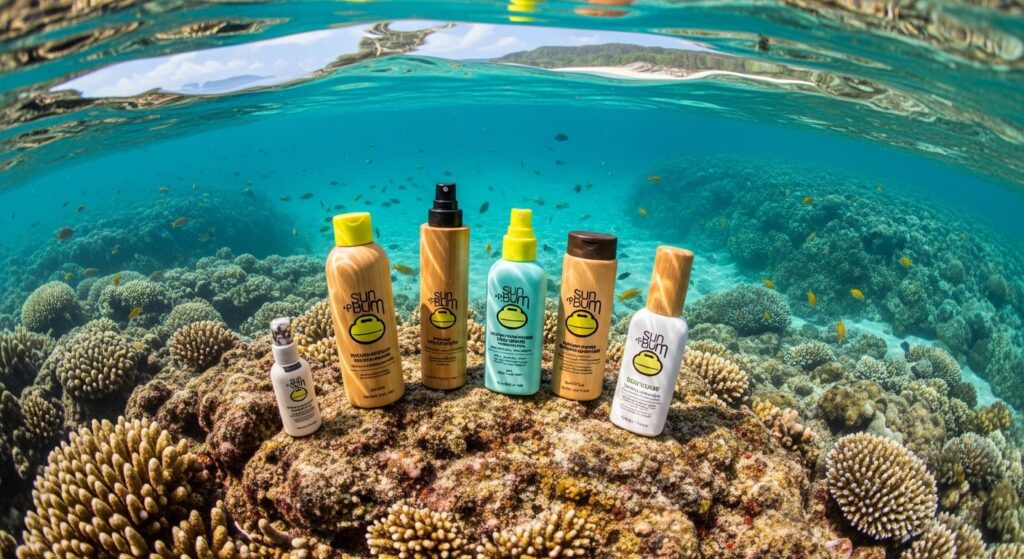
If you’re spending time in the ocean, what you put on your skin doesn’t just affect you — it affects the marine ecosystem you’re swimming through. Hawaii, Key West, the U.S. Virgin Islands, and dozens of international destinations have already banned oxybenzone and octinoxate (common chemical sunscreen filters) because of their documented damage to coral reef systems.
The good news for tattooed beach-goers: reef-safe formulas have matured significantly, and the best options now deliver strong UV protection alongside the skin-hydrating properties that keep ink looking sharp.
Sun Bum SPF 50 Mineral Sunscreen Lotion
Sun Bum has become synonymous with beach culture, and their mineral SPF 50 lotion earns that reputation honestly. The formula is non-nano zinc oxide based, free from oxybenzone and octinoxate, and enriched with vitamin E. The texture is lighter than many mineral formulas, which means it blends into the skin more naturally and leaves a significantly reduced white cast — a major win for reef-safe formulas, which have historically been the worst offenders for chalkiness.
Pros:
- Certified reef-safe (oxybenzone and octinoxate free)
- Non-nano zinc oxide — large zinc particles won’t penetrate coral tissue if washed off in ocean
- Vitamin E antioxidant protection works synergistically with SPF to protect ink
- Light, blendable texture for a mineral formula
- Widely available at beach retailers, surf shops, and Amazon
- Vegan and cruelty-free
Cons:
- Some white cast still present on very deep skin tones
- Lightly scented (banana fragrance) — not ideal for fragrance-sensitive skin
- SPF 50 is solid but not exceptional for extreme UV conditions
Best for: Eco-conscious beach-goers with tattooed skin who want a formula that protects their ink and the ocean they’re swimming in.
All Good Sport Sunscreen SPF 50
All Good occupies the premium eco-conscious tier of the reef-safe market. Their sport formula is certified B Corp, made with organic ingredients, and built around non-nano zinc oxide — meaning the zinc particles are physically too large to be absorbed by coral polyps. The formula contains red raspberry seed oil, rose hip oil, and green tea extract, creating a legitimately nourishing product that doubles as skincare for your tattooed skin.
Pros:
- B Corp certified — rigorous environmental and social accountability standards
- Organic, food-grade ingredients — genuinely clean formula inside and out
- Non-nano zinc oxide with coral reef safety certification
- Antioxidant-rich formula (green tea, raspberry seed) provides additional free-radical defense for ink
- Water-resistant up to 80 minutes
Cons:
- Thick consistency requires more work to blend — not ideal for quick reapplication
- More pronounced white cast than Sun Bum
- Premium price point
Best for: Serious eco-advocates, surfers, and divers with tattooed skin who want the cleanest possible formula without compromising protection.
Step-by-Step: How to Keep Tattoos from Fading in the Sun
Knowing which sunscreen to buy is only half the equation. The other half is knowing how to use it correctly — because even the best SPF 50 formula provides minimal protection if it’s applied wrong, applied too late, or never reapplied after your third lap in the ocean.
Step 1: Time Your Application Right
Apply your chosen sunscreen 15 to 20 minutes before you step onto the beach or into direct sunlight. This applies to both chemical and mineral formulas:
- Chemical sunscreens require this time window to be absorbed into the skin and activate their UV-filtering chemistry.
- Mineral sunscreens are effective immediately on contact, but that 15-minute window ensures even coverage has settled and any missed spots have been caught.
Applying sunscreen in the parking lot or while walking to the water means you’re unprotected for the exact moment your skin hits peak UV exposure.
Step 2: Don’t Be Stingy — Apply More Than You Think You Need
The #1 reason sunscreen underperforms in real-world conditions is under-application. Clinical SPF testing is conducted with 2mg of product per square centimeter of skin — a quantity most people use only a fraction of in practice.
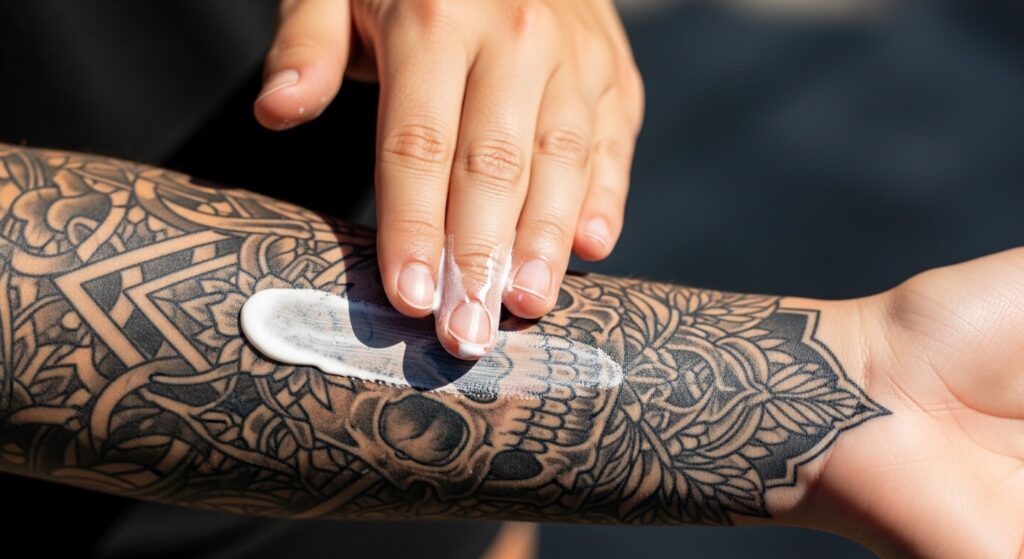
For tattooed skin, a generous application isn’t optional — it’s the entire point of the product. Here’s how to apply correctly:
- Lotions: Squeeze a quarter-sized amount for an average forearm tattoo. For a full sleeve, you need significantly more.
- Apply in sections: Don’t try to cover a full arm in one pass. Work in overlapping sections to ensure complete coverage across every centimeter of ink.
- Mineral formulas: After application, gently tap and pat the product into the skin rather than rubbing aggressively. Tapping helps distribute the zinc oxide evenly and eliminates white cast more effectively than vigorous rubbing.
- Don’t forget borders: The skin immediately surrounding your tattoo is still your skin — and UV damage around the tattoo edges contributes to the blurry, “blown-out” appearance that develops over years without protection.
Step 3: The Reapplication Rule — Non-Negotiable
No sunscreen lasts all day. Water, sweat, toweling off, and simple time all degrade the protective layer on your skin. The rule is firm:
- Reapply every 90–120 minutes during any outdoor activity, regardless of whether you’ve been in the water.
- Reapply immediately after every swim, regardless of how recent your last application was.
- Reapply immediately after toweling off — the physical friction of a towel removes meaningful sunscreen coverage.
- Use your SPF stick for mid-day touch-ups over existing lotion — it’s faster, cleaner, and more practical than re-applying lotion over sandy skin.
Set a phone alarm if you tend to lose track of time at the beach. Sunburned tattooed skin is not just painful — it’s a direct assault on your ink that compounds with every unprotected exposure over the years.
Post-Beach Aftercare for Tattooed Skin
What you do after the beach matters almost as much as the SPF you applied before it. Hours of salt water, UV exposure, sand, and sunscreen residue take a collective toll on your skin — and tattooed skin needs a proper recovery routine to bounce back looking sharp.
Step 1: Wash It Off Gently
Once you’re home or back at your accommodation, the first priority is cleansing. Salt water is dehydrating. Chlorine strips the skin’s natural oils. Sunscreen residue — particularly thick mineral formulas — can clog pores if left on overnight.
Use a gentle, fragrance-free body wash or dedicated tattoo cleanser and rinse the tattooed area thoroughly with lukewarm water. Avoid hot water — it increases skin inflammation and amplifies UV-related redness. Avoid scrubbing with a loofah or rough cloth over tattooed areas; use your hands or a soft cloth with minimal pressure.
Pat the skin dry with a clean towel. Don’t rub.
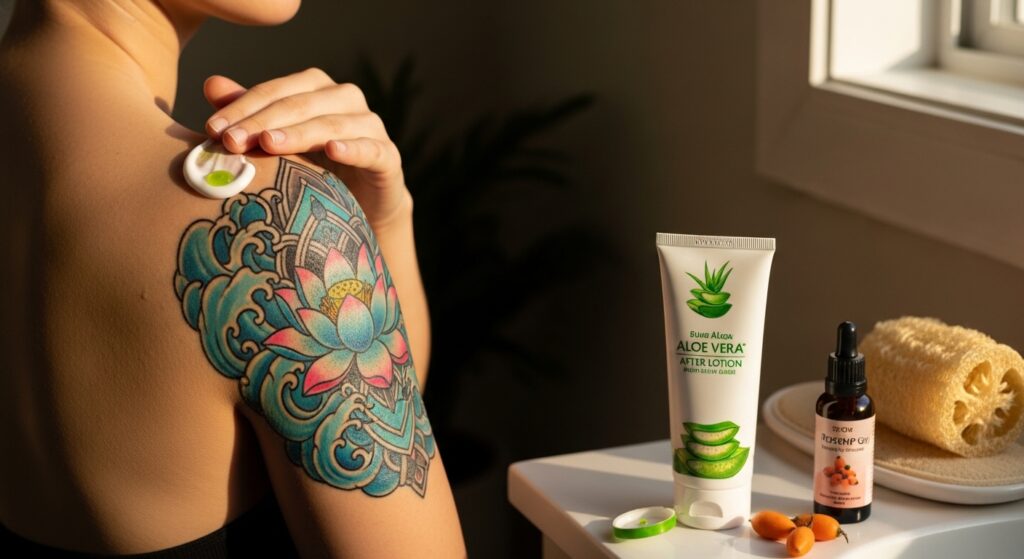
Step 2: Hydrate to Elevate
This step is where your tattoo’s post-beach appearance is won or lost. Dehydrated skin makes tattoos look flat, dull, and faded — even when the ink itself is perfectly intact. A well-moisturized tattoo literally looks newer, crisper, and more saturated than the same tattoo on dry skin.
Apply a generous layer of after-sun lotion or a dedicated tattoo moisturizer while the skin is still slightly damp — this locks in moisture most effectively. Look for formulas containing:
- Aloe Vera: The gold standard for post-sun skin recovery. Anti-inflammatory, cooling, and deeply hydrating — it reduces the UV-triggered skin stress that contributes to long-term fading.
- Vitamin E: Applied topically post-sun, vitamin E neutralizes free radical damage caused by UV exposure and helps maintain the skin’s ability to retain ink.
- Hyaluronic Acid: Draws moisture from the environment into the skin, providing the deep hydration that keeps the dermis (where your ink lives) healthy and resilient.
- Shea Butter or Cocoa Butter: Rich emollients that seal moisture in overnight and restore the skin barrier after a day of salt, sun, and SPF.
Avoid alcohol-based products, heavily fragranced lotions, and anything with synthetic cooling agents (like menthol) immediately post-sun — these can further irritate UV-stressed skin.
Frequently Asked Questions About Tattoo Sun Protection
Absolutely — and this is one of the most common misconceptions in tattoo care. UV damage is cumulative, meaning it builds up over your entire lifetime of sun exposure. A tattoo that’s a decade old has already absorbed years of UV radiation, and every unprotected day adds to that total. The ink may appear stable right now, but without ongoing SPF protection, the slow degradation of pigment continues invisibly until it becomes visible — at which point it’s already done. Applying broad-spectrum SPF 30+ to any tattooed skin exposed to sunlight, regardless of the tattoo’s age, is the only way to preserve what’s there.
Not when applied correctly to fully healed skin — quite the opposite. Sunscreen is the single most effective product available for preserving tattoo appearance over time. The confusion usually stems from two scenarios: applying SPF to a healing tattoo (which can cause infection and should never be done) or using a heavily fragranced or alcohol-based formula that irritates sensitive tattooed skin. On a fully healed tattoo, a quality mineral or broad-spectrum SPF actively slows down the UV-driven fading process that would otherwise be unavoidable.
Technically yes — any broad-spectrum SPF 30+ is better than no sunscreen at all. However, sunscreens formulated specifically for tattooed skin tend to include moisturizing ingredients like shea butter, vitamin E, and aloe vera that serve a dual purpose: protecting the ink and keeping the surrounding skin hydrated. Hydrated skin makes tattoos look inherently more vivid. A basic SPF protects — a tattoo-specific SPF protects and enhances. If you’re choosing between a generic drugstore lotion and a dedicated tattoo formula, the latter is worth the investment for your ink’s long-term appearance.
Conclusion — Enjoy the Beach Without Sacrificing Your Ink
Here’s the truth that tattoo artists rarely say loudly enough: the quality of your aftercare over years has more impact on your tattoo’s long-term appearance than the skill of the artist who applied it. Phenomenal linework and vibrant color can be completely undone by a few unprotected summers. And conversely, even a modest tattoo can stay looking sharp and vivid for decades with consistent, simple sun protection habits.
You don’t need to avoid the beach. You just need the right products in your bag and the discipline to actually use them.
Keep a mineral lotion in your cooler for the initial application. Tuck a clear SPF stick into your beach bag for quick touch-ups after swimming. Rinse off and moisturize when you get home. That’s it. That three-step habit, repeated across every beach day this summer, is the difference between ink that looks just as good at 50 as it did the day you got it — and a blurry shadow of what it used to be.