
Introduction: The Shift in Blush Trends for 2026
If 2024 was the year of “strawberry girl makeup” and 2025 saw the return of maximalism, blush trends in 2026 have settled into a fascinating duality: the “undone” athletic aesthetic versus hyper-sculpted elegance. We are officially seeing the retirement of harsh, gray-toned contouring. In its place, blush has taken center stage as the primary tool for shaping the face.
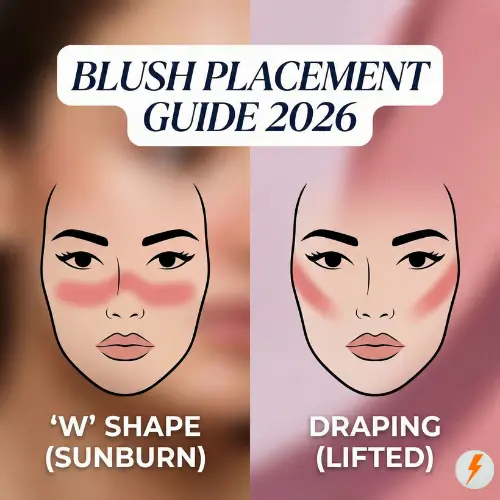
The biggest shift this year is the move toward “Boyfriend Blush”—a trend characterized by a flush that sits lower on the cheeks, mimicking the natural redness you get after a run or a gym session. This athletic, healthy glow has paved the way for the sunburn blush trend, which rejects the idea that blush must only lift the face. Instead, 2026 is about blush placement that tells a story of health, vitality, and time spent outdoors. The question isn’t just “what color suits me?” but “where do I want to draw the eye?”—whether it’s widening the face with a horizontal strip or lifting it with vertical draping.
Choosing Your Formula: The Rise of Cream Blush in 2026
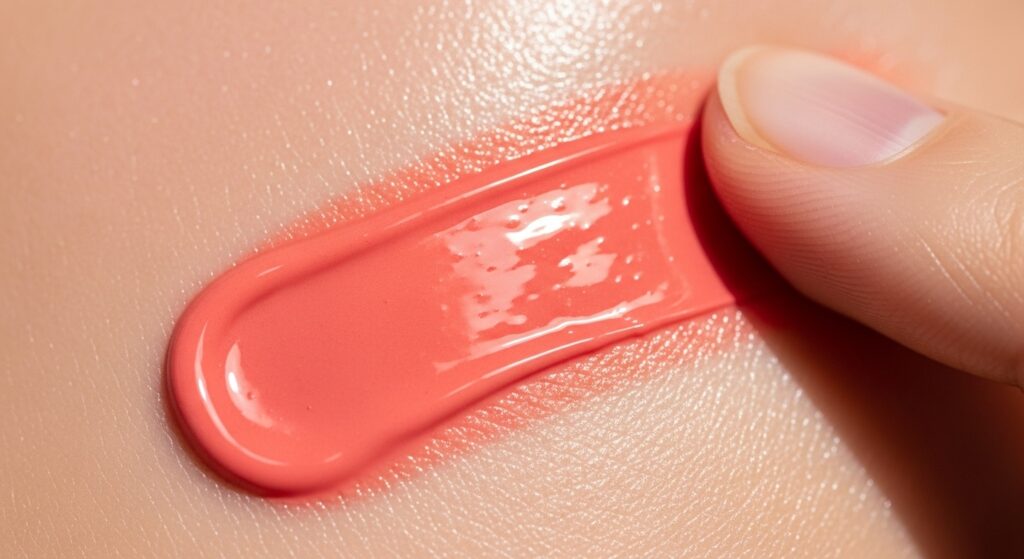
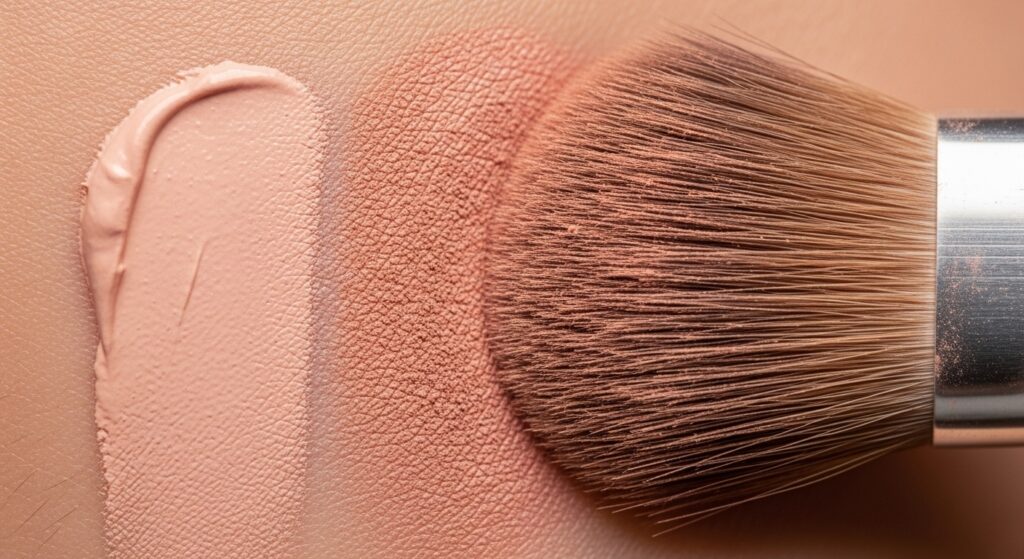
To achieve the “skin-like” finish required for modern placement, the tools you use are critical. The cream vs. liquid vs. powder debate has a clear winner this year. While powders act as a setting agent, cream blush has become the undisputed king of 2026.
Why Cream is King for the “W” Shape: The “W” shape (or sunburn effect) relies on the illusion that the color is coming from within the skin, not sitting on top of it. Cream blush formulas melt into the pores and foundation, allowing you to drag color across the textured bridge of the nose without it looking chalky or patchy. Liquid blushes are a close second but can dry down too quickly for the complex blending required in draping.
Understanding Undertones: For a natural flush, matching your undertone is key. In 2026, we are seeing a move away from generic peaches and pinks toward nuanced shades.
- Cool Tones: Berry and mauve creams work best for the “Boyfriend Blush” look, simulating natural exertion.
- Warm Tones: Terracotta and vibrant orange creams are essential for the sunburn effect, mimicking UV exposure.
Trend 1: The “W” Shape (The Sunburn Effect)
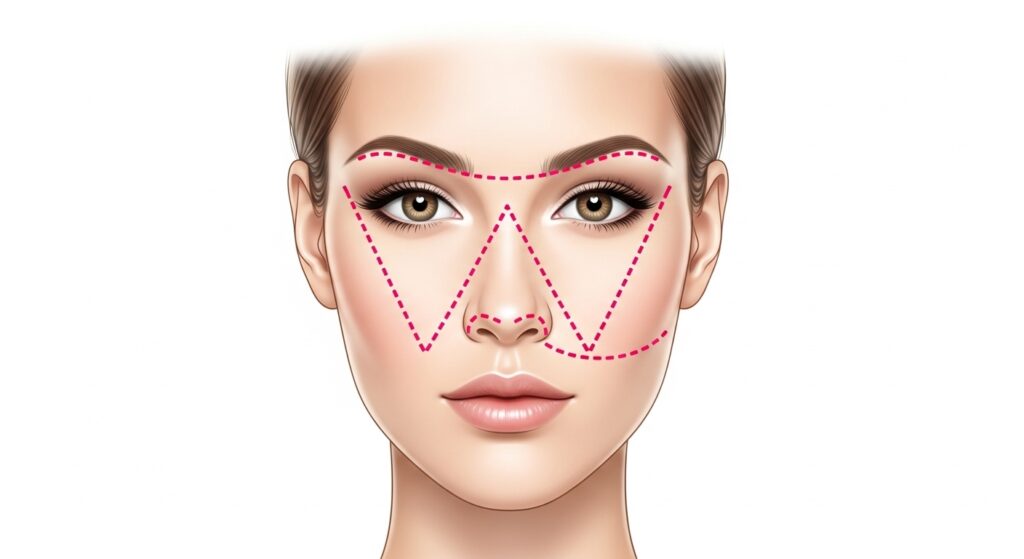
What is it? The “W” blush shape is exactly what it sounds like: a continuous line of color that starts at the ear, dips down to the cheek, goes up over the bridge of the nose, and repeats on the other side. It mimics where the sun naturally hits your face, creating a youthful, “just back from vacation” vibe.
Who is it for? This technique is ideal for Gen Z aesthetics and those with long or oval faces who want to shorten the mid-face visually. It creates a horizontal break that creates the illusion of a wider, more youthful facial structure.
Step-by-Step Application:
- Starting Points: Load your brush with a highly pigmented cream blush. Start at the high point of your cheekbone (near the outer corner of the eye).
- The Connection: Sweep the brush inward toward the nose, go over the bridge (not the tip), and connect to the other cheek.
- The “Burned” Blend: Use a damp beauty sponge to press the product in. To avoid looking “bruised,” ensure the edges are seamless.
Pro Tip: Dot a few faux freckles over the blush on the nose to sell the “sunburn” realism.
Trend 2: Blush Draping (The Instant Facelift)
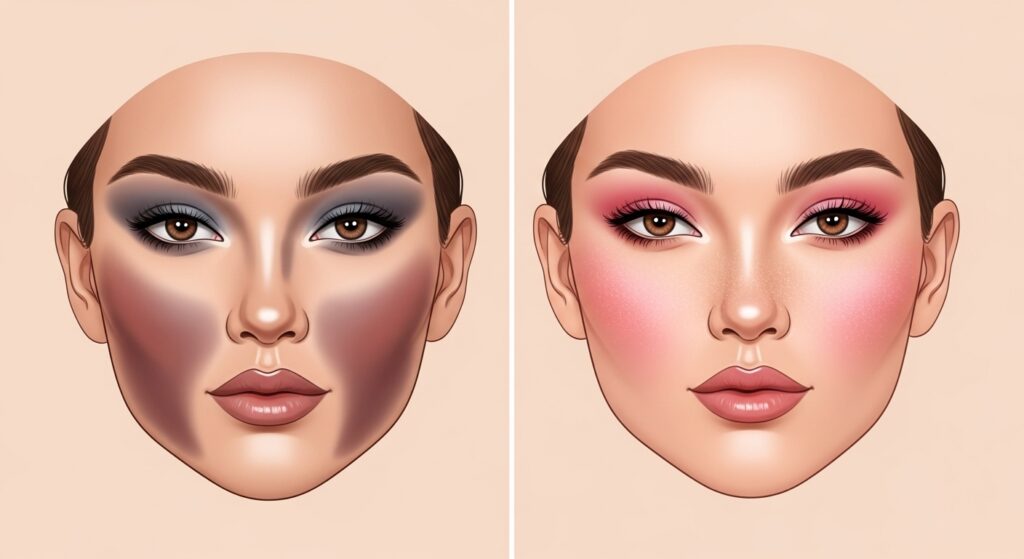
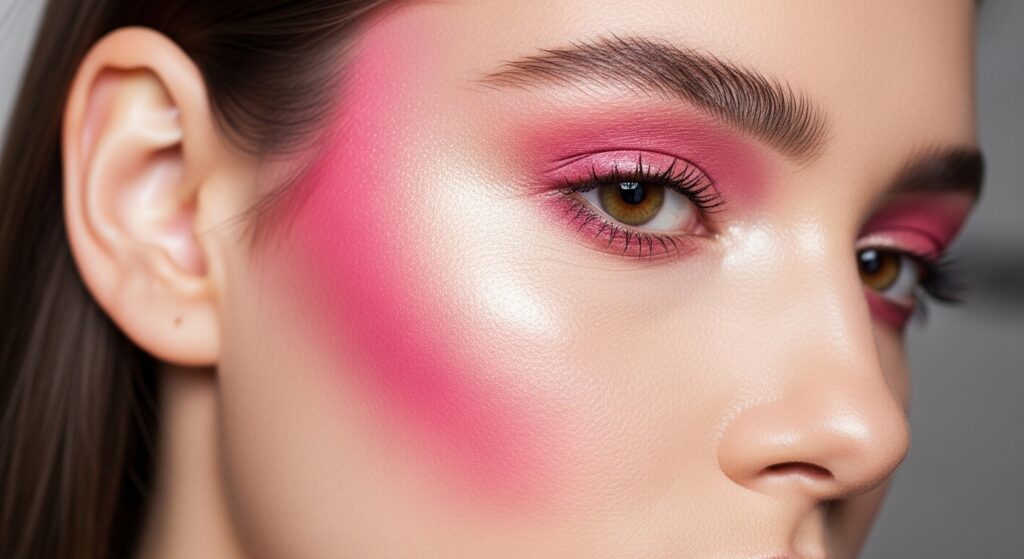
What is it? While the “W” shape widens, Blush Draping lifts. Often called the “non-surgical facelift,” this 70s-inspired technique involves applying blush high on the cheekbones and blending it into the temples and brow bone. In 2026, we use this instead of bronzer to structure the face.
Who is it for? This is the go-to technique for mature skin, round face shapes, or evening glamour. It draws the eye upward, combating gravity and sagging.
Step-by-Step Application:
- Placement: Ignore the “apples” of your cheeks. Start applying color at the top of the cheekbone, near the hairline.
- The “C” Shape: Blend the blush upwards in a “C” formation, wrapping around the outer corner of the eye and fading into the temple.
- Glass Skin Finish: To modernize this retro look, layer a liquid highlighter over the high points of the blush. This creates a wet-look reflection that emphasizes the bone structure even more.
Trend 2: Blush Draping (The Instant Facelift)
What is it? Think of this as a non-surgical facelift. You use blush instead of brown contour. It sculpts your bone structure. This technique draws the eye upward. It was huge in the 70s. Now, it is back for 2026.
Who is it for? This look is perfect for mature skin. It fights gravity. It creates instant definition. Choose this for evening events. It looks sharp and chic. It works best on round faces that need angles.
Step-by-Step Application:
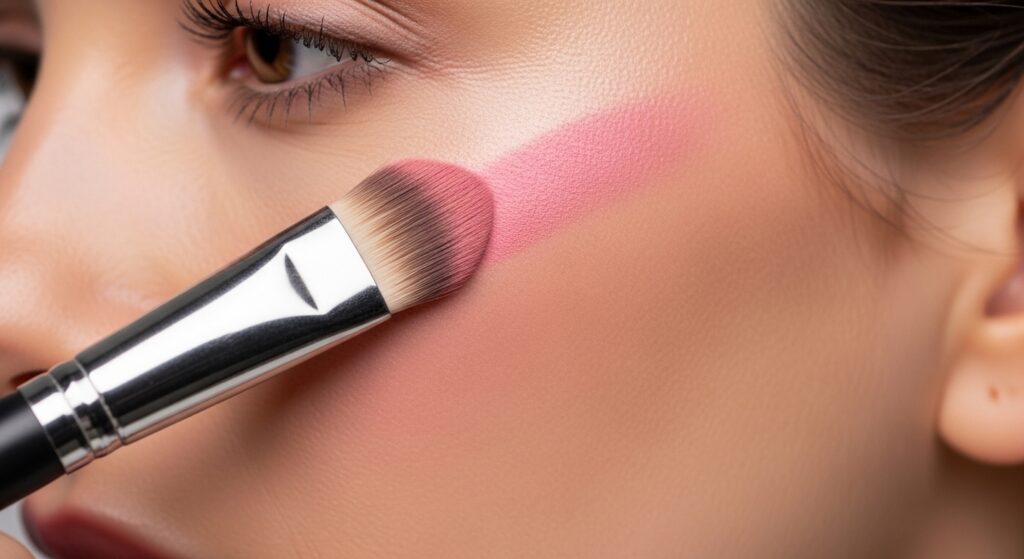
- Placement: Start high up. Do not smile. Place the brush on your temple. Connect it down to the top of your cheekbone.
- The “C” Shape: Blend the color in a “C” motion. Wrap it around the outer eye. Fade it into your hairline. Keep the center of your face bare.
- Glass Skin Finish: Layer a liquid highlighter on top. Apply it to the highest point of the cheek. This adds a wet, lifted look.
“W” Shape vs. Draping: Which Technique Suits You?
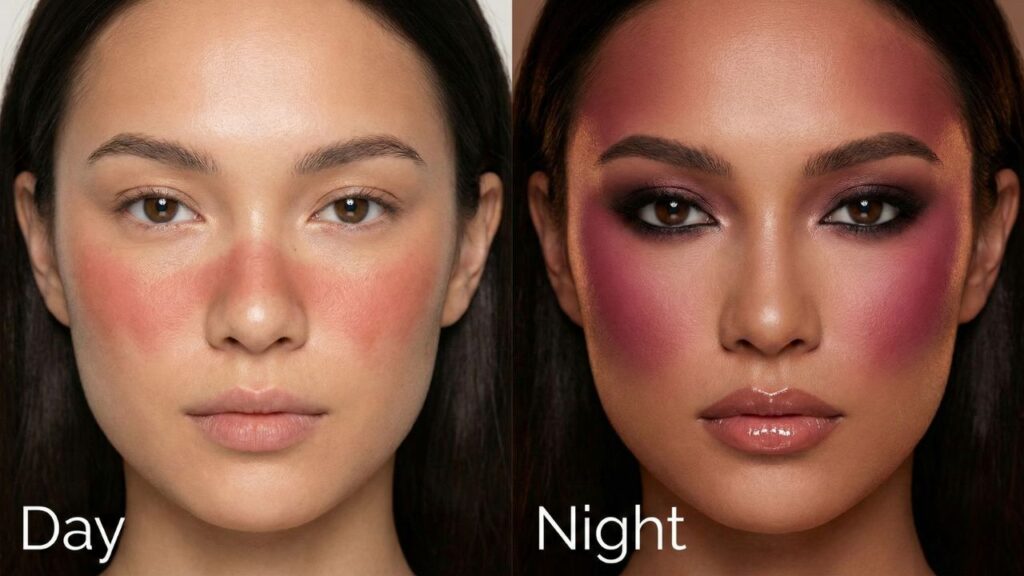
Vibe Check: Cute & Sunkissed (“W”) vs. Sharp & Chic (Draping) The “W” shape is youthful. “W” shape looks like a day at the beach. It mimics a natural sunburn. It feels casual and effortless. Use this for a “cute” aesthetic.
Draping is dramatic. It looks high-fashion. It mimics a model’s bone structure. Draping feels intentional and bold. Use this for a “fierce” aesthetic.
Occasion Guide:
- Daytime Freshness: Go with the “W” shape. It pairs well with minimal eye makeup. It suits brunch or school runs.
- Nighttime Glamour: Choose draping. It pairs well with a smokey eye. It suits dates or parties. It stands out in dim lighting.
Customizing Placement According to Your Face Shape
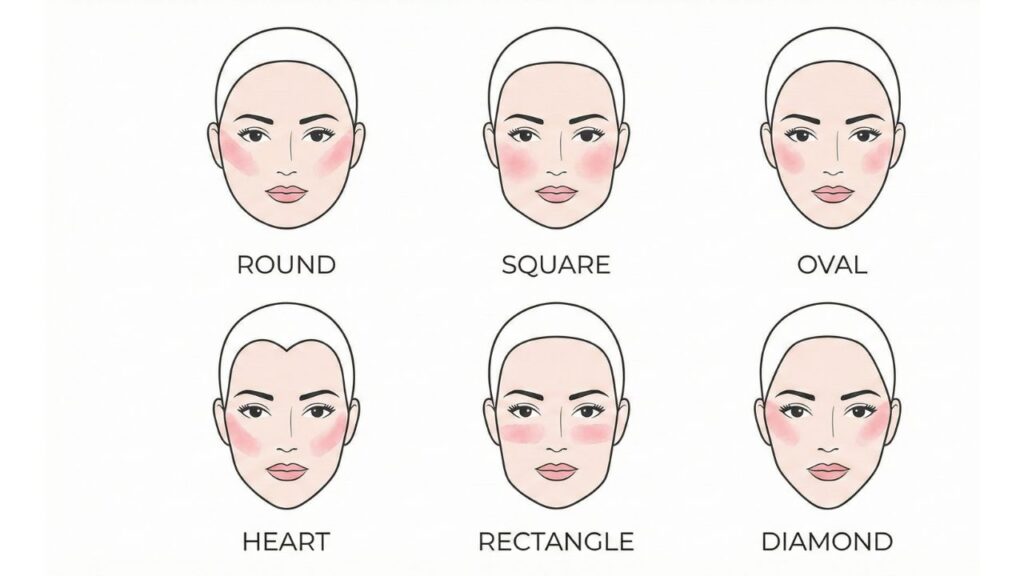
Round Face Blush Application Your goal is structure. Avoid the apples of your cheeks. This makes the face look rounder. Use the draping technique. Apply blush slightly lower than the pupil. Blend up towards the ear. This cuts the roundness.
Square Face Blush Application Your goal is softening. Your jawline is strong. You need to balance it. Use the “W” shape. Focus color on the apples. Blend softly outward. This breaks up the angles. It makes the face look gentler.
Oval Face Blush Application You are lucky. Most styles work for you. Try transition placement. Apply blush to the middle of the cheek. Blend upwards. Do not go too close to the nose. Keep it balanced.
Heart-Shaped Face Blush Application Your chin is narrow. Your forehead is wide. You need balance. Apply blush in a “C” shape. Focus on the bottom of the cheekbones. Diffuse the color. This widens the jaw visually.
Rectangular & Diamond Face Application Rectangle: Focus on width. Apply blush horizontally. Start at the apple. Blend straight out to the ear. Diamond: Focus on the top. Apply to the tops of cheekbones. Blend outward. Do not apply near the hollows. High placement highlights your unique structure.
Advanced Techniques for 2026 (Pro Tips)
The “Double Layer” Method Do you want your blush to last 12 hours? Layering is the secret. Start with a cream blush. This grips the skin. Let it set for a minute. Top it with a matching powder blush. The powder “locks” the cream in place. This creates bulletproof wear time. It works perfectly for long events.
The “Gradient Flush” This is the ombre lip trend, but for cheeks. You need two shades. Pick a light pink and a deeper berry. Apply the light shade to the center of the cheek. Apply the darker shade toward the hairline. Blend them where they meet. This creates a 3D effect. It makes cheeks look fuller.
Blush for Mature Skin Draping is magic for aging skin. We lose volume as we age. Draping creates a visual lift. Keep the color high. Avoid the hollows of the cheeks. Stay away from the nose folds. This draws the eye upward. It makes the face look tighter and fresher.
Common Blush Mistakes (And How to Fix Them)
Applying Too Low (The “Drag Down” Effect) Never smile while applying blush. When you stop smiling, your cheeks drop. If you apply blush while smiling, it ends up too low. This drags your face down. It makes you look tired. Keep your face relaxed. Apply blush to the upper cheekbone only.
Wrong Texture for Skin Type Texture matters more than color. Do you have dry skin? Avoid matte powders. They look chalky. They settle into fine lines. Use creams or liquids. Do you have oily skin? Avoid heavy balms. They will slide off. Use a stain or a powder.
Over-Blushing the Nose (The “Rudolph” Effect) The sunburn trend is cute. Looking like a reindeer is not. Do not put blush on the tip of your nose. It looks like you have a cold. Keep the color high on the bridge. Connect it to the cheeks. Leave the tip bare. This looks sunkissed, not sick.
FAQ: Your Top Blush Questions Answered
Look for “skincare-infused” formulas. The best blushes now contain peptides or hyaluronic acid. Stick blushes are trending for ease. They are travel-friendly and blend fast.
Apply bronzer first. Bronzer creates the structure. It acts as the background. Apply blush second. It blends the harsh edges of the bronzer. It brings life back to the face.
Yes, but be careful. Keep the contour on the outer edges. Use it to carve the jaw. Use the “W” blush in the center. Do not overlap them too much. It can look muddy. Keep the zones separate.
Prep is key. Use a gripping primer. Use the “Double Layer” method. Finish with a setting spray. Look for sprays with a “matte” or “dewy” hold. Do not touch your face during the day.
Final Takeaway: Experimenting with Your Flush
Makeup should be fun. There are no strict rules. Try the “W” shape on Saturday. Try draping on Saturday night. Take selfies of both. See which one makes you feel confident. Your face shape is unique. Your blush style should be too. Welcome to the era of the expressive flush.