

Introduction
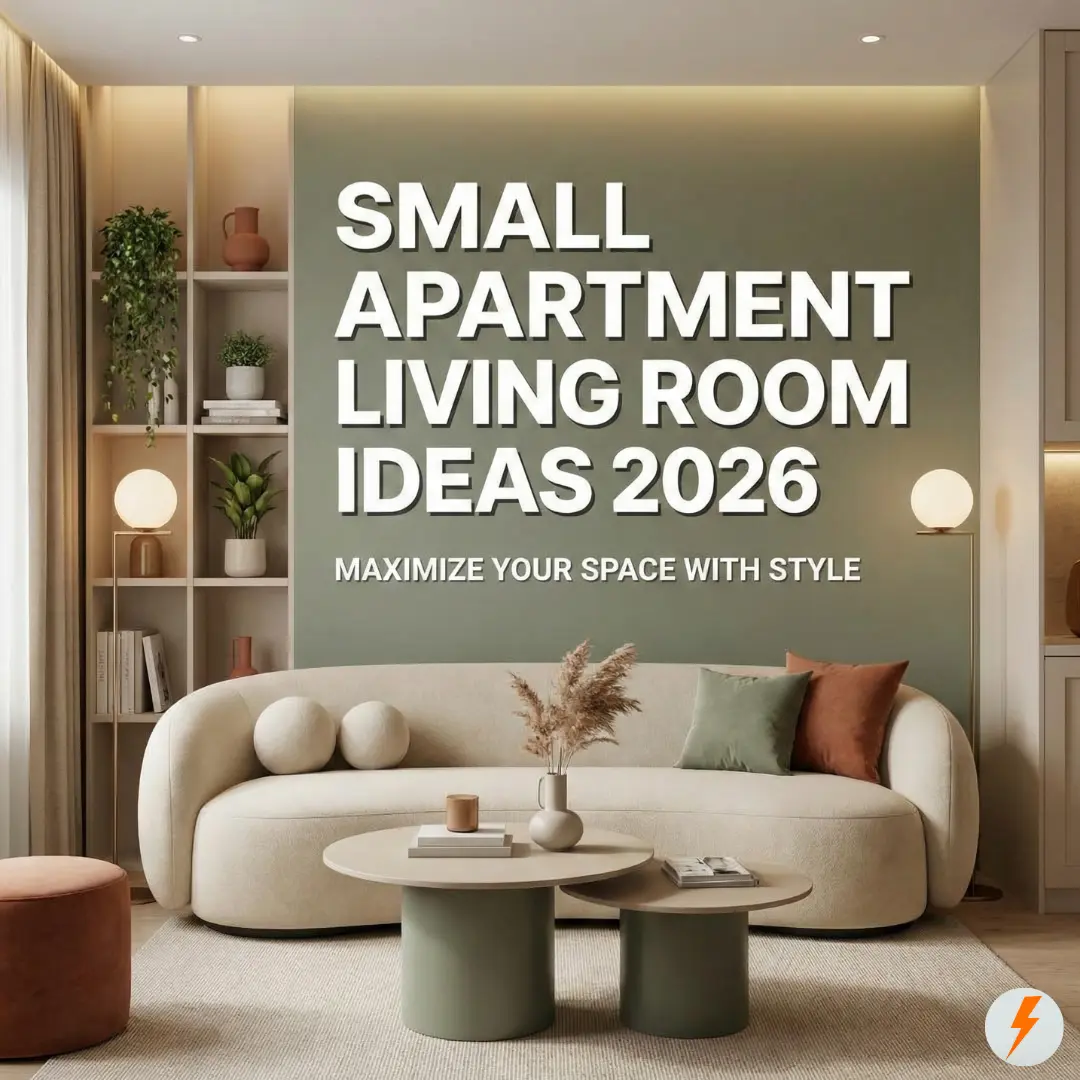
Let’s be real: the gap between the sprawling “Instagram interiors” we double-tap daily and the reality of our own boxy city apartments is often painfully wide. Trying to squeeze a sectional, a dining nook, and a WFH setup into 250 square feet can feel like an impossible game of Tetris. But having a small footprint doesn’t mean you have to sacrifice style or functionality.
The good news is that the interior design trends for 2026 are shifting in favor of small-space dwellers. We are moving away from sterile, sparse minimalism and embracing warmer, richer aesthetics. Designers are calling for “The Collector’s Living Room” and “Texture-Maxxing”—trends that celebrate personality and coziness over empty space. The challenge now isn’t just fitting things in; it’s about layering personal style without creating claustrophobia.
Promise: In this ultimate guide to small apartment living room ideas for 2026, we are ditching outdated advice. We will show you ingenious living room layouts that create breathing room, introduce you to the hardest-working multi-functional furniture, and reveal how to adapt the top 2026 decor trends to actually make your tiny home feel bigger.
Planning Your 2026 Small Living Room Layout
Before you buy that trendy velvet armchair or start painting an accent wall, you need a map. The biggest mistake renters and homeowners make in small spaces is buying furniture before understanding the room’s flow.
A successful small living room layout isn’t just about fitting furniture in; it’s about creating a functional ecosystem where you aren’t constantly bumping your shins against the coffee table. In 2026, smart planning is the ultimate luxury.
Defining Zones in Open Concept Apartments
In modern apartment living, the “living room” is rarely just for lounging. It’s often the dining room, the home office, and the entertainment hub all rolled into one open-concept square. If you don’t define these zones, your apartment will feel like one messy, undefined college dorm room.
The key to mastering small open concept apartment layouts is creating visual separation without erecting physical barriers that block light.
- The Area Rug Rule: Use area rugs to anchor distinct zones. A large rug under the sofa and coffee table clearly marks the “lounge zone.” A smaller, round rug under a bistro table defines the “dining nook.” If the furniture isn’t touching a rug, it’s floating in no-man’s-land.
- Furniture as Dividers: Never underestimate the power of a sofa back. Facing a sofa away from a dining area or a desk acts as a soft wall, psychologically separating work or eating from relaxation. Low shelving units placed perpendicular to a wall can also act as functional room dividers that don’t block sightlines.
- Lighting Shifts: Use different lighting sources for different zones. A bright task lamp for your WFH corner designates “focus time,” while warm, dimmable sconces around the sofa signal “downtime.”
Traffic Flow & Measurements
In a large home, an extra foot of space doesn’t matter. In a tiny apartment, inches make or break the room’s functionality. Ignoring traffic flow—the path you walk to get from point A to point B—is the fastest way to make a room feel cramped.
Before finalizing your apartment furniture arrangement, get out the painter’s tape and map it on the floor.
- The Golden Rules of Clearance: Interior designers swear by specific measurements for comfortable living.
- Major Walkways: Aim for a minimum of 30 to 36 inches for main traffic paths (like the route from the entryway to the kitchen).
- The Coffee Table Gap: Leave 14 to 18 inches between your sofa seating and the coffee table—close enough to set down a drink, far enough to stretch your legs.
- Furniture Breathing Room: Try not to jam furniture right up against door frames or radiators. Even a 2-inch gap can make the layout look intentional rather than forced.
The “Floating Furniture” Layout
It is the most common instinct when decorating a small living room: push the sofa against one wall, push the TV stand against the opposite wall, and hope for the best.
Stop doing this in 2026.
Pushing everything against the perimeter creates what designers call the “waiting room effect.” It leaves a large, useless dead space in the middle of the room and strangely emphasizes the room’s small dimensions by outlining the box.
Instead, embrace the “floating furniture arrangement.” Pull your sofa and armchairs away from the walls, even just a few inches. If you have enough width, float the entire seating arrangement in the center of the room on a large rug. This creates an intimate conversation island and allows air to flow around the pieces, making the room feel dynamic and surprisingly larger. It turns the seating area into a destination, rather than an afterthought lining the walls.
Top Small Living Room Design Trends for 2026
If you think “small space style” begins and ends with minimalism, think again. The biggest interior design trends for 2026 are moving away from the “sad beige” aesthetic of the early 2020s. We are entering an era of personality, warmth, and tactile richness. The goal is no longer to make the apartment look empty; it’s to make it feel like a boutique hotel suite.
“Texture-Maxxing” in Small Spaces
One of the buzziest terms for 2026 is “Texture-Maxxing.” In a small living room, you don’t have the luxury of adding 20 different decor items—that’s just clutter. Instead, you add visual interest through materials.
Think of texture as the “quiet” decoration. It adds depth without taking up physical space.
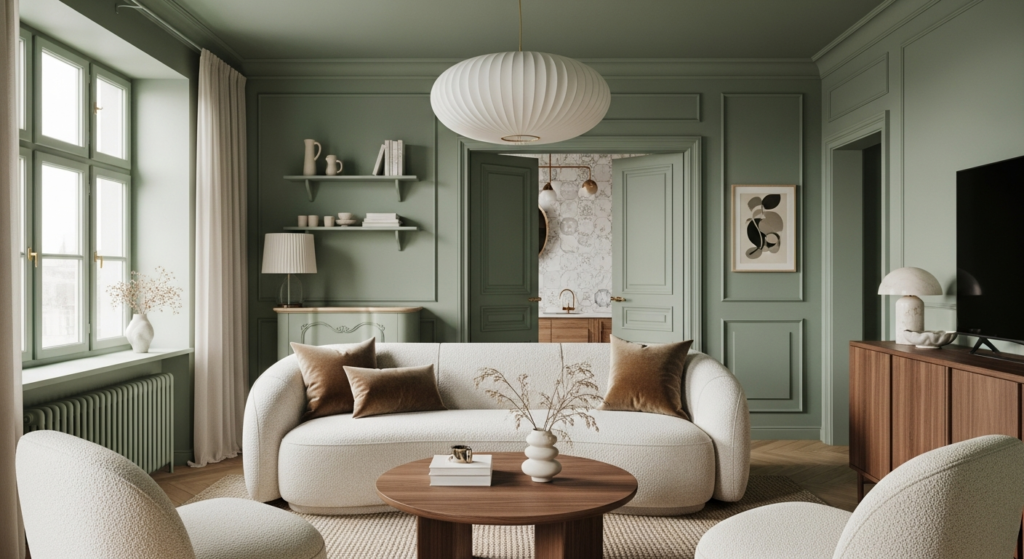
- The Mix: Pair a nubby bouclé sofa with a sleek marble coffee table and a rough jute rug.
- Woven Woods: Incorporate rattan or cane webbing on cabinet doors. These materials are lightweight and airy, keeping the visual weight of the furniture low while adding a natural, organic feel.
- Velvet & Corduroy: These fabrics absorb light rather than reflecting it, creating a moody, cozy atmosphere that makes a small room feel intentional and enveloped.
Warmer, Richer Color Palettes
For years, the advice was: “Paint it white to make it look bigger.” In 2026, we are debunking this myth. White boxes can feel clinical and cold. The new trend is “Moody Color Washing” and “Color Capping.”
- Color Drenching: This technique involves painting the walls, trim, and even the ceiling the same color. In a small apartment, this blurs the harsh lines where the wall meets the ceiling, making the boundaries of the room disappear.
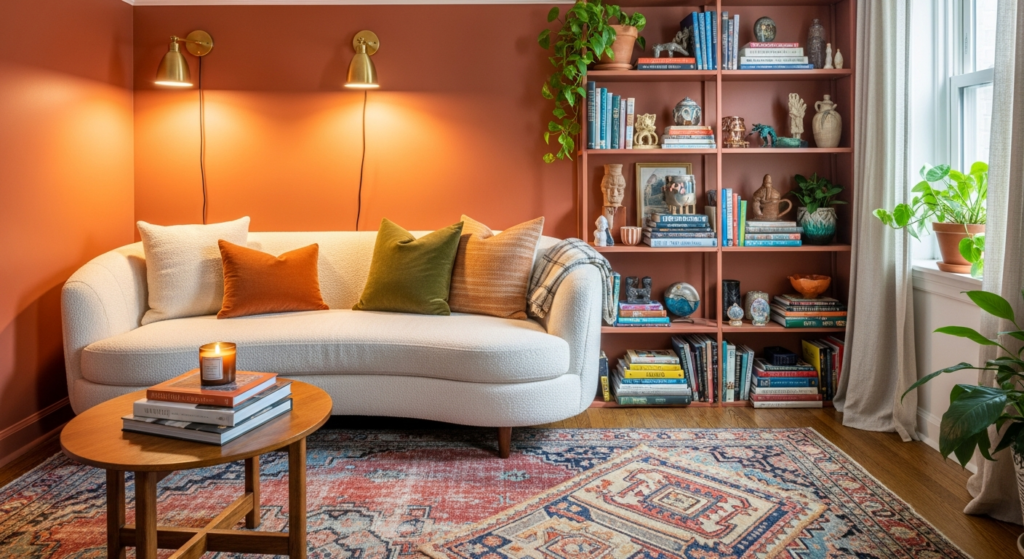
- The 2026 Palette: Move towards “Earthy Tonal” shades. Think terracotta, sage green, warm taupe, and rich ochre. These colors recede visually and create a cozy “jewel box” effect.
- Color Capping: If painting the whole room feels too bold, try “Color Capping”—painting just the ceiling and the top 12 inches of the wall a contrasting color. It draws the eye up, emphasizing vertical height rather than limited floor space.
Organic Lines & Curves
Sharp corners are the enemy of small spaces—both visually and physically (nobody likes bruising a shin). Curved furniture is dominating 2026 showrooms for a practical reason.
- Traffic Flow: A curved sofa or a round coffee table creates more walkable space around the edges of the room.
- Visual Softness: Organic shapes mimic nature, which relaxes the eye. A kidney-shaped sofa or a round ottoman breaks up the “boxy” feel of a standard square apartment living room.
Space-Saving Furniture Essentials (Multi-Functional Heroes)
In a small apartment, every piece of furniture must fight for its right to be there. If it only does one thing, it’s not working hard enough. The best furniture for small spaces in 2026 combines hidden utility with high-end design.
The Compact Sleeper Sofa
Gone are the days of flimsy futons. The modern compact sleeper sofa is a dual-purpose champion designed for everyday comfort.
- Deep Seating: Look for models that prioritize “deep seat” dimensions (at least 24 inches depth). This ensures that even a smaller sofa feels luxurious for lounging.
- Mechanism Matters: Opt for “easy-glide” or “pull-out” mechanisms rather than fold-downs, which often require moving the sofa away from the wall. This turns your living room into a guest room in seconds without rearranging the whole house.
Vertical Storage & Statement Cabinetry
When you can’t build out, build up. One of the top trends for 2026 is “Extra-Special Cabinetry.” This means treating storage not just as utility, but as a focal point.
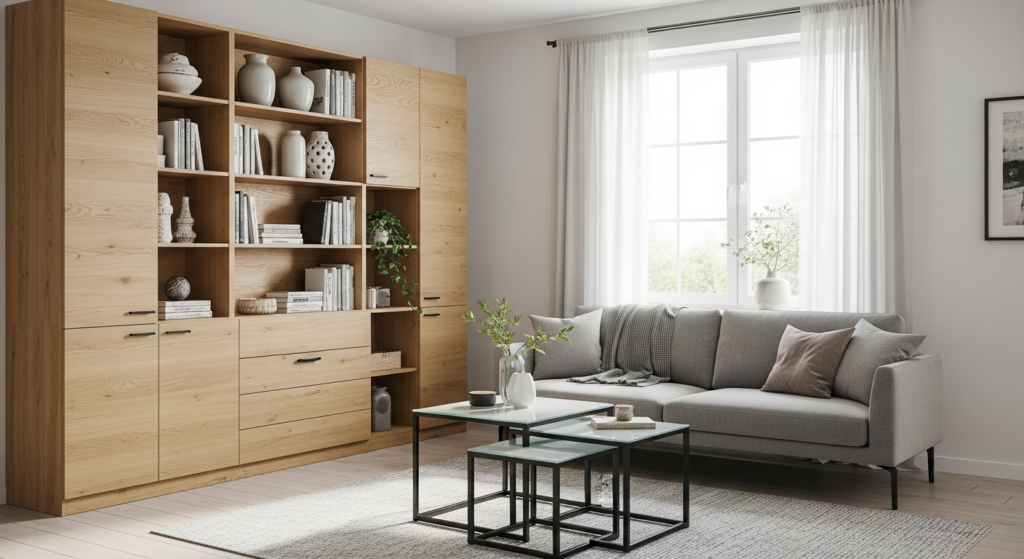
- Floor-to-Ceiling: Use tall bookcases or shelving units that go all the way to the ceiling. This draws the eye upward, making ceilings feel higher, while maximizing storage volume.
- Closed vs. Open: Use a mix. Closed lower cabinets hide the unsexy clutter (cords, paperwork), while open upper shelves display your curated decor.
- The “Wall of Storage”: Instead of scattering small storage pieces around the room (which creates visual noise), commit one single wall to a large, integrated storage unit.
Nesting Tables & Extendable Dining
Flexibility is key. Nesting coffee tables allow you to expand your surface area when guests arrive and tuck it away when you need room for yoga. Similarly, an extendable dining console can function as a slim hallway desk during the day and expand into a dining table for four at night. These “transformer” pieces are essential for studio apartment layouts.
Decorating Strategies: Making Small Look Big
Once the layout and furniture are set, the final polish comes from decoration. This isn’t just about fluffing pillows; it’s about optical illusions.
Lighting as “Jewelry”
Floor space is precious—don’t waste it on bulky floor lamps. In 2026, wall sconces are the ultimate space hack.
- Plug-in Sconces: You don’t need an electrician. Stylish plug-in wall lights with swinging arms can replace floor lamps next to the sofa, freeing up floor space for side tables or plants.
- Statement Pendants: A large, oversized pendant light draws the eye up and creates a sense of grandeur, tricking the brain into perceiving the volume of the room as larger than it is.
The “Collector’s” Approach vs. Clutter
Minimalism is out, but that doesn’t mean hoarding is in. The “Collector’s Living Room” trend is about curation.
- Layered Antiques: Instead of many small cheap items, display a few larger, unique pieces with history.
- The “Easter Egg” Concept: Hide personal details in your decor—a framed ticket stub, a vintage camera, a stack of favorite books. Group these items on trays or shelves. When items are grouped, they read as one “unit” to the eye, reducing the feeling of clutter.
Mirrors & Optical Illusions
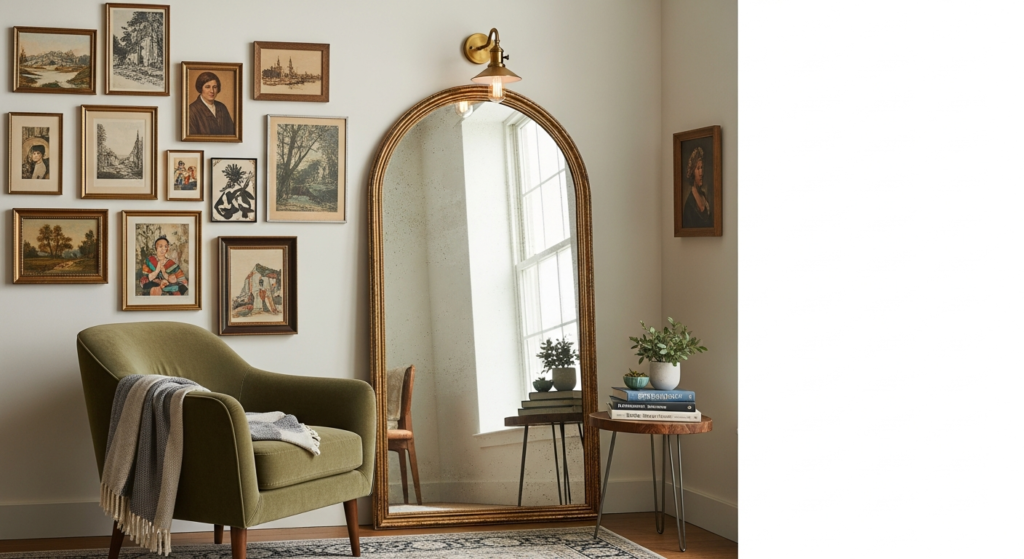
The oldest trick in the book is still the best. A large mirror is essentially a “window” you can buy.
- Placement: Place a large mirror opposite a window to bounce natural light deep into the room.
- Scale: Go big. A tiny mirror looks like a speck. A massive, leaning floor mirror (or a large round wall mirror) doubles the visual depth of the room immediately.
5 Small Apartment Living Room Layout Examples (with Floor Plans)
Sometimes, you just need to see it to believe it fits. Visualizing how to arrange furniture in a tight space is half the battle. Here are three proven small apartment floor plan concepts that solve common spatial headaches.
1. The Narrow Rectangular Layout (The “Bowling Alley”)
The Challenge: Long, narrow rooms often feel like hallways. Users tend to line furniture up on one side, which only accentuates the tunnel effect. The 2026 Fix: Break the “tunnel” by creating two distinct zones.
- The Setup: Place your sofa perpendicular to the long wall (floating in the middle of the room) to act as a divider. Behind the sofa, place a console table or a small desk. This cuts the room in half visually.
- TV Placement: Mount the TV on the wall opposite the sofa.
- Why It Works: It stops the eye from shooting straight to the end of the room and creates a cozy, square-ish seating area within the rectangle.
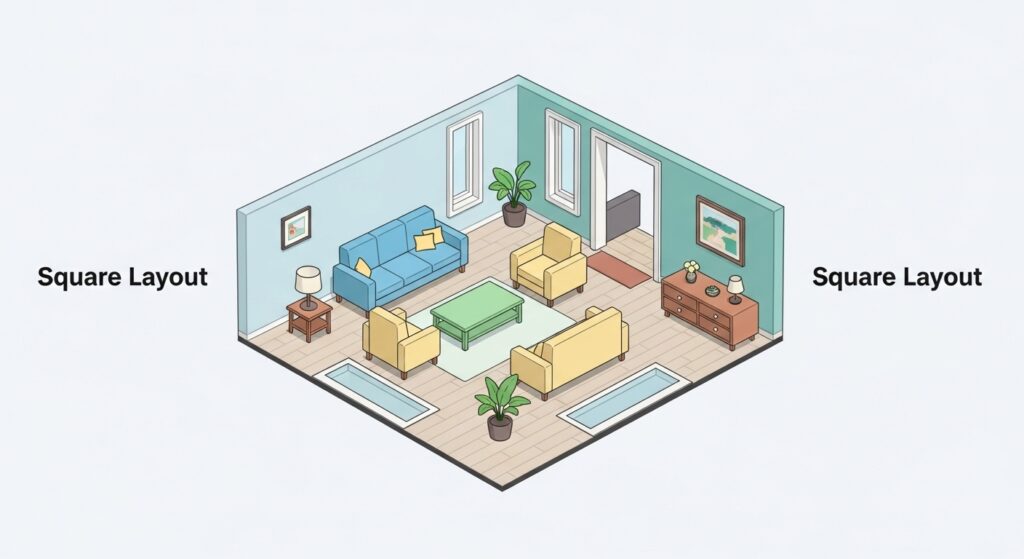
2. The Square “Conversation Pit”
The Challenge: Square rooms can feel boxy and uninspired, often leaving a “dead zone” in the absolute center. The 2026 Fix: Create a floating island.
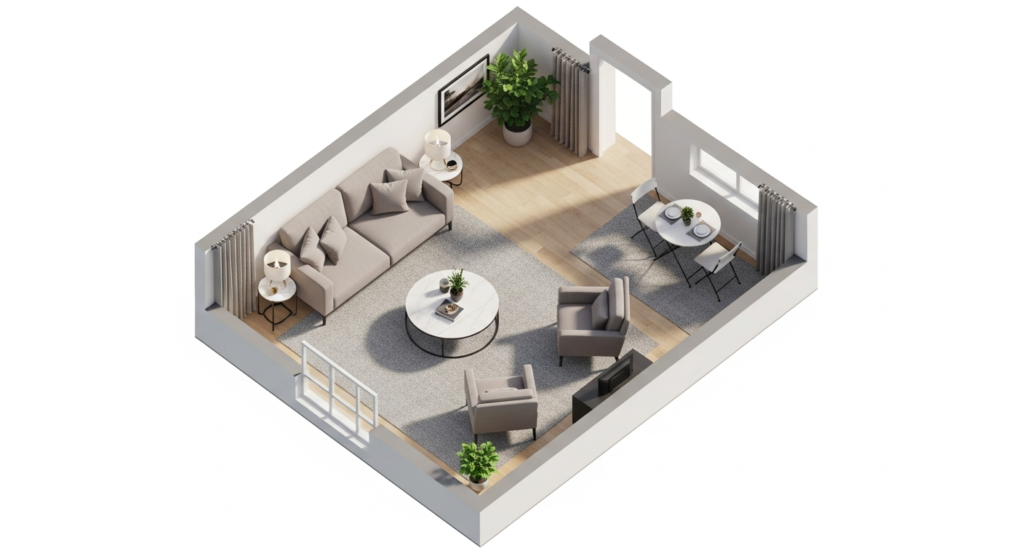
- The Setup: Pull all furniture away from the walls. Place a rug in the exact center. Arrange a compact sofa and two armchairs facing each other on the rug.
- Corner Use: Use the empty corners behind the furniture for tall plants, a standing lamp, or a round bookshelf.
- Why It Works: It facilitates conversation and traffic flow. By rounding off the corners with decor, the room feels less like a box and more like a lounge.
3. The L-Shaped Dining/Living Combo
The Challenge: A common layout in modern apartments where the kitchen bleeds into the living space. The 2026 Fix: Zone with rugs and lighting.
- The Setup: Treat the “L” as two squares. The larger square is for living; the smaller “leg” of the L is for dining.
- The Anchor: Use a round dining table in the smaller section to contrast with the rectangular lines of the sofa in the larger section.
- Why It Works: It respects the architecture of the room. The transition feels natural rather than forced.
Frequently Asked Questions (FAQs)
The best color for a small living room in 2026 is no longer stark white. Interior designers are favoring warm neutrals like oatmeal, taupe, and soft terracotta, or earthy tones like sage green. These colors add depth without shrinking the space. The key trend is “Color Drenching”—painting walls, trim, and baseboards the same color to blur boundaries and make the room appear larger.
To arrange furniture with a TV in a small space, prioritize the viewing distance and traffic flow.
1. Mount the TV: Save floor space by mounting the TV on the wall or using a slim “easel” stand.
2. Opposite Approach: Place the sofa on the opposite wall, but pull it out 2-3 inches to avoid a flat look.
3. The Triangle: If the room is very small, place the TV in a corner and angle the sofa towards it to open up the center of the room.
Yes, absolutely. Using dark colors in a small apartment creates a “jewel box” effect. Deep shades like navy, charcoal, or forest green blur the edges of the room, making it hard for the eye to tell where the walls end. This adds infinite depth. To make it work, ensure you have good lighting (sconces, lamps) and use mirrors to reflect light so the room feels moody, not cave-like.
Conclusion
Maximizing a small apartment living room in 2026 isn’t about owning less—it’s about designing smarter. By embracing vertical storage, swapping boxy furniture for organic curves, and using multi-functional pieces, you can create a home that feels spacious and stylish.
Remember, the trends this year—from “Texture-Maxxing” to “The Collector’s Aesthetic”—are on your side. They encourage you to layer in your personality and make that tiny footprint feel like a grand design statement.
Which of these 2026 trends will you try first—the “Color Drenching” paint trick or the “Floating Furniture” layout? Drop a comment below and let us know!