
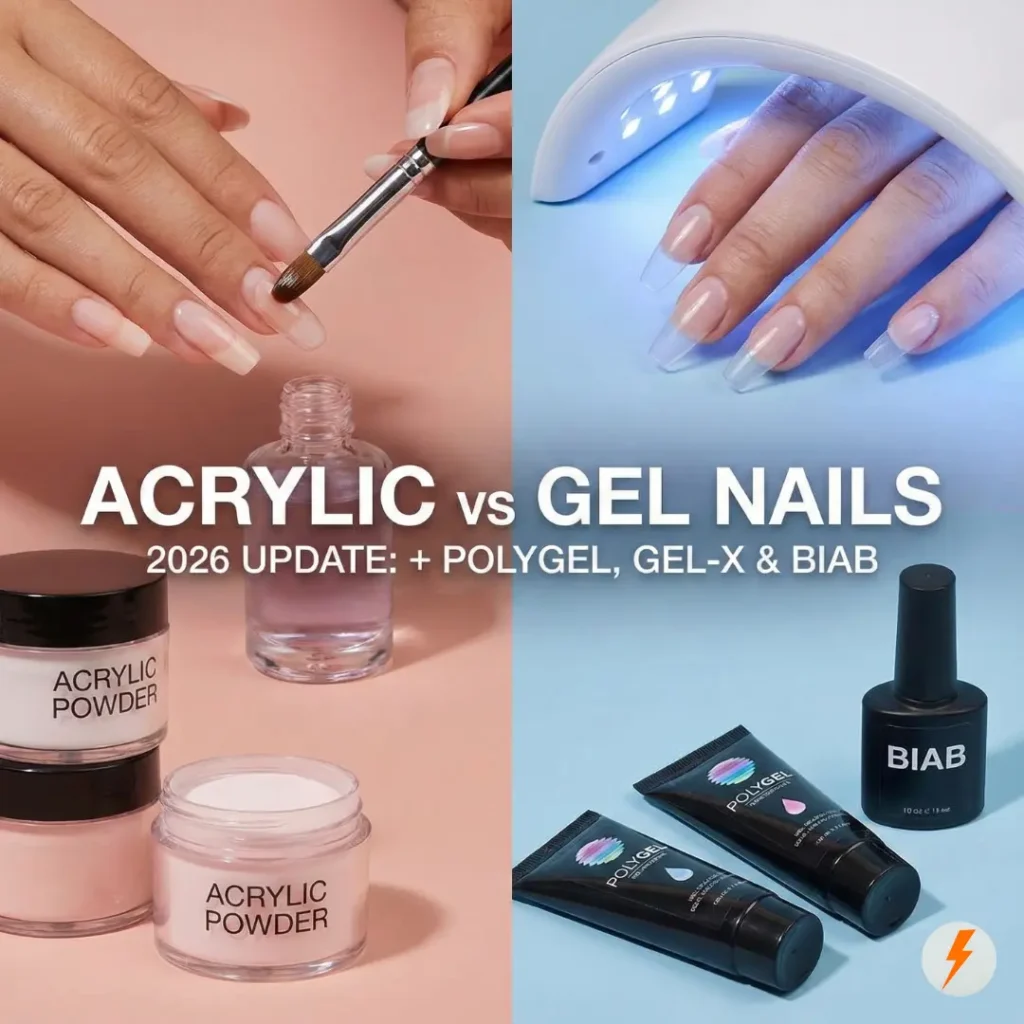
While the classic debate between traditional monomer-and-powder acrylic versus hard UV gel is still relevant, the nail industry has seen massive innovation in the last few years. In 2026, the biggest trend isn’t just choosing between the two classics; it’s about the rise of hybrid systems that aim to solve the downsides of both.
Today, many salon-goers are moving toward “healthier” alternatives that offer the strength of acrylic without the strong odor, or the flexibility of gel with easier removal processes. We have updated this guide below to include major contenders like Polygel (Acrygel), Soft Gel Extensions (like Gel-X), and BIAB (Builder In A Bottle), which are currently dominating social media feeds and salon menus.
What Are Acrylic Nails?
Acrylic Nails are created by combining a liquid monomer with a powder polymer, forming a hard, protective layer over your natural nails. Once applied, they’re air-dried and shaped to your desired nail style. This method is widely used for nail extensions and designs requiring extra durability and strength.
Pros of Acrylic Nails
Exceptional Durability
Acrylic Nails are known for their long-lasting strength, making them a top choice for those with hands-on jobs or active lifestyles. They can endure daily wear and tear better than many other nail enhancements.
Versatile Styles and Shapes
With Acrylic Nails, you can easily achieve bold, dramatic styles like coffin nails, stiletto, or square-shaped extensions. The versatility makes them perfect for trendy nail art and statement looks.
Easy Repairs
If an Acrylic Nail chips or breaks, it’s often possible to repair it without removing the entire nail. This convenience helps maintain your manicure without frequent salon visits.
Protection for Weak Nails
For individuals with thin or brittle nails, Acrylics act as a strong shield that helps prevent cracking and peeling, allowing your natural nails time to grow.
Cons of Acrylic Nails
Less Natural Appearance
While Acrylic Nails can be stunning, they may appear less natural compared to Gel Nails, especially if applied by an inexperienced technician. A proper application is key to achieving a polished look.
Strong Chemical Odor
The process of applying Acrylic Nails involves chemicals that emit a strong odor. To minimize discomfort, consider using low-odor monomer, wearing a mask, and ensuring good ventilation during application.
Heavier Feel
Depending on the thickness and design, Acrylic Nails may feel thicker and heavier than gel nails. If you prefer a lighter, more natural feel, opt for an acrylic overlay instead of full extensions.
Potential Nail Damage
Improper removal or poor application techniques can cause damage to your natural nails, making them thin, weak, or prone to breakage. Always seek professional removal or follow a Clean Girl / Old Moneysafe at-home technique.
Gel vs. Acrylic Nails: A Complete Comparison of Durability, Application, Maintenance, and Removal
What Are Acrylic Nails?
Acrylic Nails are a type of artificial nail enhancement made by combining a liquid monomer and a powder polymer to create a paste that hardens when exposed to air. This mixture is applied to the natural nail or nail tip to create a strong, durable nail extension. Once shaped and filed, Acrylic Nails can be painted and styled in various designs, making them a favorite for those who love bold and creative nail art.
What Are Gel Nails?
Gel nails, on the other hand, involve applying a gel-based polish to the natural nail, which is then cured under a UV or LED light. The curing process hardens each layer, resulting in a glossy, smooth finish. Gel nails feel more natural and flexible compared to acrylics and are often preferred for their lightweight appearance and shine.
Durability: Which Lasts Longer?
- Acrylic Nails are well-known for their strength and durability. They can last 3 to 4 weeks with proper care and are resistant to daily wear and tear. This makes them a go-to choice for people with active lifestyles or jobs that involve frequent hand use.
- Gel nails are slightly less durable but still provide 2 to 3 weeks of beautiful wear. They’re more flexible, which can reduce the chance of breakage but makes them more prone to chipping or peeling.
👉 Winner: Acrylic Nails for superior durability.
Application Process: What’s Involved?
- Applying Acrylic Nails involves skill. The nail technician combines the monomer and polymer to create a paste, then shapes it over the natural nail or extension tip. This process doesn’t require light curing but does require proper ventilation due to its strong chemical odor.
- Gel nails are applied in layers, with each coat cured under a UV or LED lamp. The process is odor-free and may be faster for short nails but can be time-consuming due to multiple curing steps.
👉 Winner: Gel nails for a gentler and odor-free experience.
Maintenance: How Often Will You Need Fills?
- Acrylic Nails need regular fills every 3 to 4 weeks to keep them looking fresh and prevent lifting. One major advantage is that acrylics are easier to repair if they break or crack.
- Gel nails typically require fills every 2 to 3 weeks. If they chip, it can be harder to fix without removing the entire gel layer.
👉 Winner: Acrylic Nails for ease of maintenance and repair.
Beyond the Classics: The Rise of Hybrids and “Health-First” Gels (2026 Trends)
Currently, the market is shifting away from damaging application methods. Clients in 2026 are prioritizing natural nail health and are looking for products that are HEMA-free (hypoallergenic) and require less aggressive filing. Here is how the modern contenders stack up against traditional acrylic and gel.
1. Polygel (also known as Acrygel)
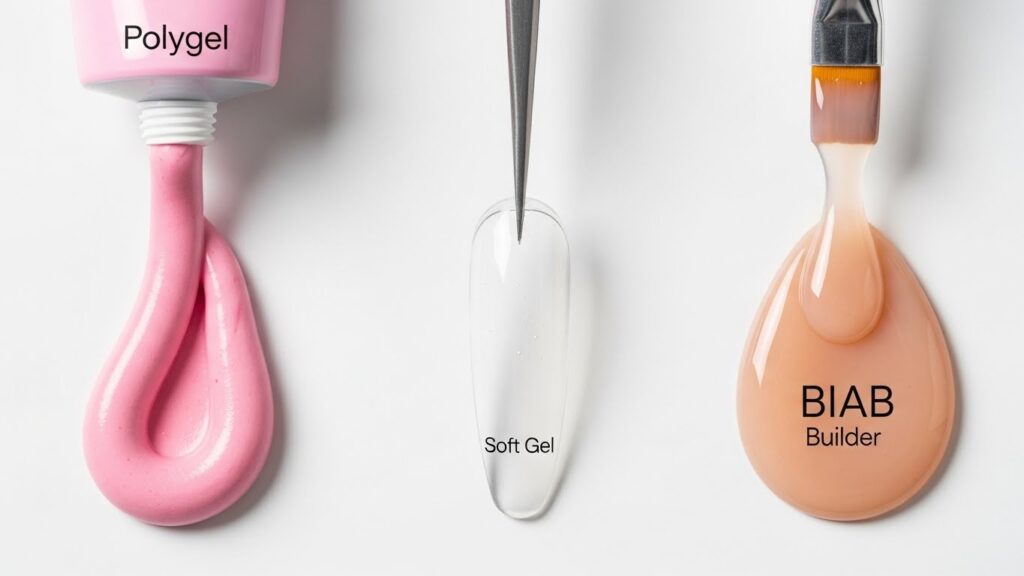
The Best of Both Worlds. Polygel is a hybrid formula that comes in a tube, with a consistency resembling putty or toothpaste. It was designed specifically to bridge the gap in the Acrylic Nails VS Gel Nails debate.
- How it works: It is dispensed onto the nail and shaped using a brush dipped in a slip solution (usually alcohol), then cured in an LED/UV lamp. It does not set until you cure it, giving you unlimited time to perfect the shape.
- Why it’s trending in 2026: It has absolutely no odor (unlike acrylic monomer) but is significantly stronger and lighter than traditional hard gels. It is excellent for sculpting extreme lengths or fixing broken nail corners.
- Verdict: If you love the hardness of acrylic but hate the smell and the rush to shape it before it dries, Polygel is your upgrade.
2. Soft Gel Extensions (e.g., Gel-X)
The Speed Queen. This is currently the most popular method for instant length in busy salons. Unlike acrylics where the extension is “built” by hand, these are pre-shaped, full-coverage tips made entirely of soft gel.
- How it works: A soft gel adhesive is applied to the natural nail, the pre-made tip is pressed on, and it is flash-cured with a handheld LED light to lock it in place.
- Why it’s trending in 2026: Speed and health. A full set can be applied in 45 minutes. More importantly, because they are made of soft gel, they are a true soak-off system. You do not need to file them down to the natural nail to remove them, making them a healthier alternative to acrylics for chronic extension wearers.
- Verdict: The best choice for clients who want flawless, identical shapes instantly with zero damage during removal.
3. BIAB (Builder In A Bottle) / Structured Gel Manicures
The Natural Nail Savior. BIAB is not typically used for massive extensions. It is a very thick, durable soak-off gel used to create an overlay on your natural nails.
- How it works: It is applied like regular gel polish but in thicker layers to build an “apex” (structure) over the natural nail. This added strength allows your natural nails to grow long underneath without snapping.
- Why it’s trending in 2026: It aligns with the massive “clean beauty” movement. The goal here isn’t fake tips; it’s about the natural nail journey. It’s perfect for creating the viral “Soap Nail” or “Jelly Nail” aesthetics that require a sheer, glossy finish.
- Verdict: If you want to transition away from acrylics and grow your own nails strong, switch to BIAB.
Removal: Which Is Gentler on Natural Nails?
- To remove Acrylic Nails, you’ll need to soak in acetone for 20 to 30 minutes. Overuse of acetone can dry out the natural nails, but most users only need to soak off their acrylics a few times a year.
- Gel nails also require an acetone soak, especially for hard gel types. Soft gel can be easier to remove, but improper techniques like peeling can damage the nail bed.
👉 Winner: Gel nails for potentially gentler removal, but only with correct techniques.
Cost: Which Is More Budget-Friendly?
- Acrylic Nails are often more affordable for full sets and fills, especially at standard salons. Prices vary depending on design complexity.
- Gel nails may cost a bit more due to the UV/LED curing process and specialty polishes.
👉 Winner: Acrylic Nails for budget-conscious beauty lovers.
Which Is Right for You: Acrylic or Gel?
Lifestyle Considerations
- Acrylic Nails: Perfect for individuals with an active, hands-on lifestyle. Their durability and strength make them ideal for people who use their hands frequently—whether for work, sports, or DIY tasks. Acrylic Nails can handle more wear and tear compared to gels.
- Gel Nails: A better fit for those with a more relaxed lifestyle. They offer a lightweight, flexible finish, which is great if you want a natural feel but don’t put your nails through daily stress.
Nail Health Matters
- Acrylic Nails: If you have weak or brittle nails, Acrylic Nails can provide added strength and protection. However, improper application or removal can lead to nail damage, so always seek a licensed nail technician to maintain healthy nails.
- Gel Nails: Gentler on your natural nails and often easier to remove. Gel is a good option if you’re focused on maintaining nail health without sacrificing style.
Budget-Friendly Options
- Acrylic Nails: Generally more cost-effective than gel nails. Both the initial application and follow-up fills are typically budget-friendly, though prices can vary based on design complexity and salon location.
- Gel Nails: Often come with a higher upfront cost and may be more expensive to maintain over time. However, some people find the glossy, natural finish worth the investment.
Maintenance Requirements
- Acrylic Nails: Require fills every 3 to 4 weeks. Repairs are usually simple and quick, especially if you get chips or breaks.
- Gel Nails: Need fills every 2 to 3 weeks, and any chips usually require full removal and reapplication, making the upkeep a bit more demanding.
Appearance and Style
- Acrylic Nails: Offer a bold, dramatic look—perfect for long extensions and eye-catching nail art. If you love experimenting with designs, Acrylic Nails are your best bet.
- Gel Nails: Known for their natural, glossy appearance. They’re ideal if you prefer a subtle, clean look that resembles real nails.
Which Should You Choose for 2026 Trends?
- For the “Clean Girl / Old Money” Aesthetic: If you want the trendy, sheer “Soap Nails” look or hyper-realistic French manicures, choose BIAB or Soft Gel. Traditional acrylic is often too opaque to achieve these translucent looks.
- For 3D Korean/Japanese Art: If you want elaborate 3D textures, chrome molding, or heavy charms, Traditional Acrylic or Polygel remain superior. Their stiff nature provides the necessary foundation to hold heavy art without bending.
- The Safest Bet: If you are unsure and worried about damage, start with a soak-off soft gel option (Gel-X). It is the easiest to remove if you decide it isn’t for you.
Conclusion
When it comes to choosing between Acrylic Nails vs Gel Nails, there’s no one-size-fits-all answer—it ultimately depends on your personal preferences, lifestyle, and nail goals. If you’re someone who values strength, long-lasting durability, and bold design options, Acrylic Nails are the ideal choice. They provide a tough, customizable canvas that works especially well for those with hands-on jobs or those seeking dramatic, statement-making nails. Their cost-effectiveness and ease of repair also make them a popular option for long-term wear.
On the other hand, if you prefer a lighter, more natural look with a glossy finish, Gel Nails may be better suited for your everyday needs. They’re perfect for those who prioritize comfort and a subtle aesthetic. Whichever route you choose, the key is proper application and maintenance. Whether you opt for the strength of Acrylic Nails or the flexibility of gels, visiting a professional technician and following a good aftercare routine will ensure your manicure looks flawless and keeps your natural nails healthy underneath.